Should You Install PPF on a New Car Right Away in West Boylston?
Driving a brand-new car off the dealership lot is an incredibly satisfying experience. However, that pristine feeling can instantly vanish the moment a stray rock flies off the highway and chips your fresh paint. For vehicle owners in Central Massachusetts, installing high-quality PPF in West Boylston is the most effective way to keep your investment looking pristine. This invisible barrier absorbs the impacts of daily driving, ensuring your car remains in showroom condition.
Is it worth putting PPF on a new car?
Yes, putting paint protection film on a new car is absolutely worth it because it preserves the flawless factory paint before any damage can occur. New vehicles have softer, water-based clear coats that chip easily from road debris. By applying protection immediately, you block physical hazards and maintain the highest possible resale value.
Modern automotive manufacturing processes have evolved significantly over the last two decades. Today, manufacturers are required to use eco-friendly, water-based paints. While these paint systems are better for the environment, they are much softer and more brittle than older solvent-based options. This means your brand-new vehicle is highly vulnerable to rock chips, scratches, and pitting from the moment you drive it home.
Once your clear coat is chipped or gouged, the damage is permanent. Conventional touch-up paint rarely restores the original look, often leaving unsightly dark spots or uneven textures on the surface. Repainting a panel at a body shop is expensive and can compromise the original factory finish. A factory finish is cured at extremely high temperatures in a controlled environment, making it far superior to any aftermarket paint job.
Installing high-grade protection early prevents these headaches entirely. It acts as a sacrificial barrier that absorbs impact and deflects debris. Here are the primary benefits of immediate installation:
- Preserves the original factory clear coat from chips and abrasions.
- Prevents chemical staining from acidic bird droppings and bug splatter.
- Eliminates the risk of paint fading from intense UV exposure.
- Maintains the maximum trade-in or resale value of your vehicle.
Why Choosing PPF in West Boylston Protects Your New Car
PPF in West Boylston provides a robust defense against the unique environmental hazards of Worcester County. The regional climate in Central Massachusetts is notoriously harsh on automotive exterior surfaces. Drivers regularly navigate Route 12, Route 140, and Interstate 190, exposing their vehicles to heavy highway debris.
During the winter, municipal salt trucks coat our local roads in highly abrasive sand, gravel, and calcium chloride. These sharp materials are kicked up by traffic, acting like sandblasters against your front bumper and hood.
By selecting local protection, you ensure your car is prepared for these specific regional hazards. Whether you are commuting past the scenic Wachusett Reservoir or parking near the West Boylston Town Common, your vehicle is exposed to elements that degrade paint. Professional installation guarantees that every vulnerable panel is sealed against these localized threats.
What is a Paint Protection Film and How Does It Work?
Paint protection film, commonly referred to as a clear bra, is an advanced, multi-layered polyurethane film. It is applied directly to the painted surfaces of a vehicle to protect them from physical damage. The film is highly elastomeric, meaning it can stretch and return to its original shape without losing its structural integrity. This flexibility allows it to absorb the energy of flying gravel and road debris, preventing the impact from reaching the paint underneath.
The magic of modern film lies in its advanced chemical composition. The top layer consists of a specialized elastomeric polymer substance. This layer has self-healing properties that are activated by ambient heat or warm water. If the film gets lightly scratched or swirled during washing, the polymers slowly reform, completely erasing the defects.
Underneath the self-healing topcoat is a heavy-duty polyurethane core. This layer provides the main physical defense against deep impacts. A high-performance acrylic adhesive bonds the film securely to the paint. This adhesive is formulated to resist lifting at the edges while remaining completely safe for the paint if the film ever needs to be removed in the future.
Ceramic Coating vs. Paint Protection Film for New Cars
When researching how to protect a brand-new vehicle, many owners find themselves comparing ceramic coatings and film. While both services offer excellent exterior protection, they are designed to solve entirely different problems. Understanding these differences is crucial for choosing the right solution for your driving habits.
Investing in paint protection film for new cars is widely considered the ultimate defense against physical impact. The film is physically thick enough to absorb the energy of a rock chip, preventing the paint from cracking. A ceramic coating, on the other hand, is a microscopic liquid polymer that cures hard on top of the clear coat. While it offers incredible gloss and chemical resistance, it cannot prevent physical damage like rock chips.
Let us look at a direct comparison of these two premium services to highlight their strengths:
- Impact Resistance: Film offers maximum impact absorption, while ceramic coatings offer none.
- Chemical Protection: Both products protect against bird droppings, acid rain, and tree sap.
- Ease of Maintenance: Ceramic coatings offer superior water sheeting and dirt repellency.
- Aesthetic Enhancement: Coatings provide a deep, glass-like shine, while modern films offer a clean, glossy finish.
For the ultimate level of protection, many owners choose a hybrid approach. Applying film to the high-impact areas, such as the front bumper, hood, and mirrors, provides physical protection where it is needed most. Co-coating the rest of the vehicle, and layering a coating on top of the film, creates an incredibly glossy, hydrophobic, and rock-chip-resistant shield.
The Critical Importance of Timing: Why Immediate Installation Matters
The best time to install protective film is the day you pick up your vehicle from the dealership. Many car owners make the mistake of waiting a few weeks or months before booking an appointment. During this waiting period, your vehicle is completely exposed to the elements and road debris.
Even a short drive home on the highway can result in micro-damage. Small, sharp pebbles kicked up by other vehicles can create tiny chips in your brand-new paint. Once these chips occur, installing film over them becomes much more complicated. The film will trap air in the void created by the chip, which can leave a small bubble or make the defect look more noticeable.
By choosing new vehicle paint protection immediately, you ensure that the paint remains in its pristine, factory-original state. It prevents the need for touch-up paint or cosmetic repairs before the film can be applied. Keeping your vehicle’s paint perfect from day one is the most effective way to protect your long-term automotive investment.
The Long-Term Financial Value of Paint Protection Film
Installing a clear bra acts as an invisible shield that preserves the factory clear coat from degrading. When the time comes to trade in your vehicle or sell it privately, its cosmetic condition will heavily influence its value. Buyers and dealerships look closely at the front bumper, hood, and fenders for signs of wear. A front end covered in rock chips and road rash can significantly reduce your car’s market value.
By keeping the factory paint flawless under a durable barrier, you secure a much higher resale price. The film pays for itself by preventing depreciation caused by cosmetic wear and tear. For enthusiasts who lease their vehicles, protecting the exterior ensures they avoid costly turn-in fees for paint damage at the end of the lease term.
Central Massachusetts Road Hazards and Environmental Factors
Living in Central Massachusetts means exposing your vehicle to some of the most challenging road conditions in the country. Our local geography and weather patterns present unique risks that can quickly damage unprotected automotive paint. Understanding these environmental hazards explains why physical protection is so vital for local drivers.
During the winter months, municipalities from Worcester to Sterling rely heavily on aggressive road de-icing programs. Heavy sand and salt trucks patrol our major thoroughfares, including Route 12, Route 140, and Interstate 190. The gravel used in these mixtures remains on the roads long after the snow has melted, creating a continuous hazard for spring and summer driving.
Organic contaminants are another major concern in our beautiful, heavily wooded region. If you frequently drive near the Wachusett Reservoir, park near the historic Old Stone Church, or live in neighboring Holden, Boylston, or Clinton, your car is exposed to dense tree canopies. Acidic pine sap, oak pollen, and bird droppings can etch into your clear coat in a matter of hours, leaving permanent chemical stains.
When you are ready to shield your new vehicle from the harsh roads of Central Massachusetts, you can contact us to speak with our highly skilled team of preservation specialists who are proud to maintain a perfect 5 star google rating as of today.
Comparing PPF Options: Full Front vs. Full Body Coverage
Choosing the right level of coverage depends on your budget, driving habits, and the type of vehicle you own. Different packages are designed to protect specific areas of the car based on real-world impact data. Reviewing these options helps you select the perfect balance of protection and value for your daily driver.
| Coverage Option | Areas Protected | Primary Benefit | Recommended For |
| Partial Front | Front bumper, leading edge of hood, side mirrors | Cost-effective entry-level protection | Commuters sticking to local roads |
| Full Front | Entire bumper, full hood, full fenders, mirrors | Complete coverage of primary impact zones | Daily highway drivers on Route 12 and I-190 |
| Track Pack | Full front, rocker panels, rear wheel arches | Protects high-impact areas from tire-thrown debris | Performance cars, sports cars, and SUVs |
| Full Body | Every single painted exterior panel | Maximum protection and consistent gloss | Exotic cars, luxury vehicles, collector models |
What Does a Professional PPF Installation in West Boylston Involve?
A successful installation requires far more than simply sticking film onto a car panel. It is a highly technical, multi-stage craft that demands extreme precision and clean working conditions. Seeking a professional PPF installation in West Boylston ensures that your vehicle is treated with the highest level of care.
Step 1: Deep Chemical Decontamination and Wash
The process begins with an intensive washing and decontamination procedure to remove all surface contaminants. This includes a foam bath, a hand wash, and a clay bar treatment to extract embedded rail dust, iron particles, and industrial fallout. Any wax, grease, or dealership sealant must be completely stripped from the paint to ensure the film’s adhesive can bond perfectly to the surface.
Step 2: Multi-Stage Paint Correction
Once the vehicle is chemically clean, technicians perform a detailed paint correction. This step involves using dual-action polishers and specialized compounds to eliminate swirl marks, light scratches, and holograms. It is absolutely vital to perfect the paint before application, as any remaining defects will be permanently locked beneath the clear urethane film.
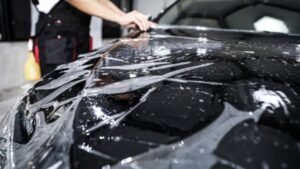
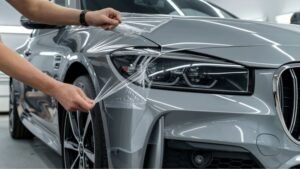
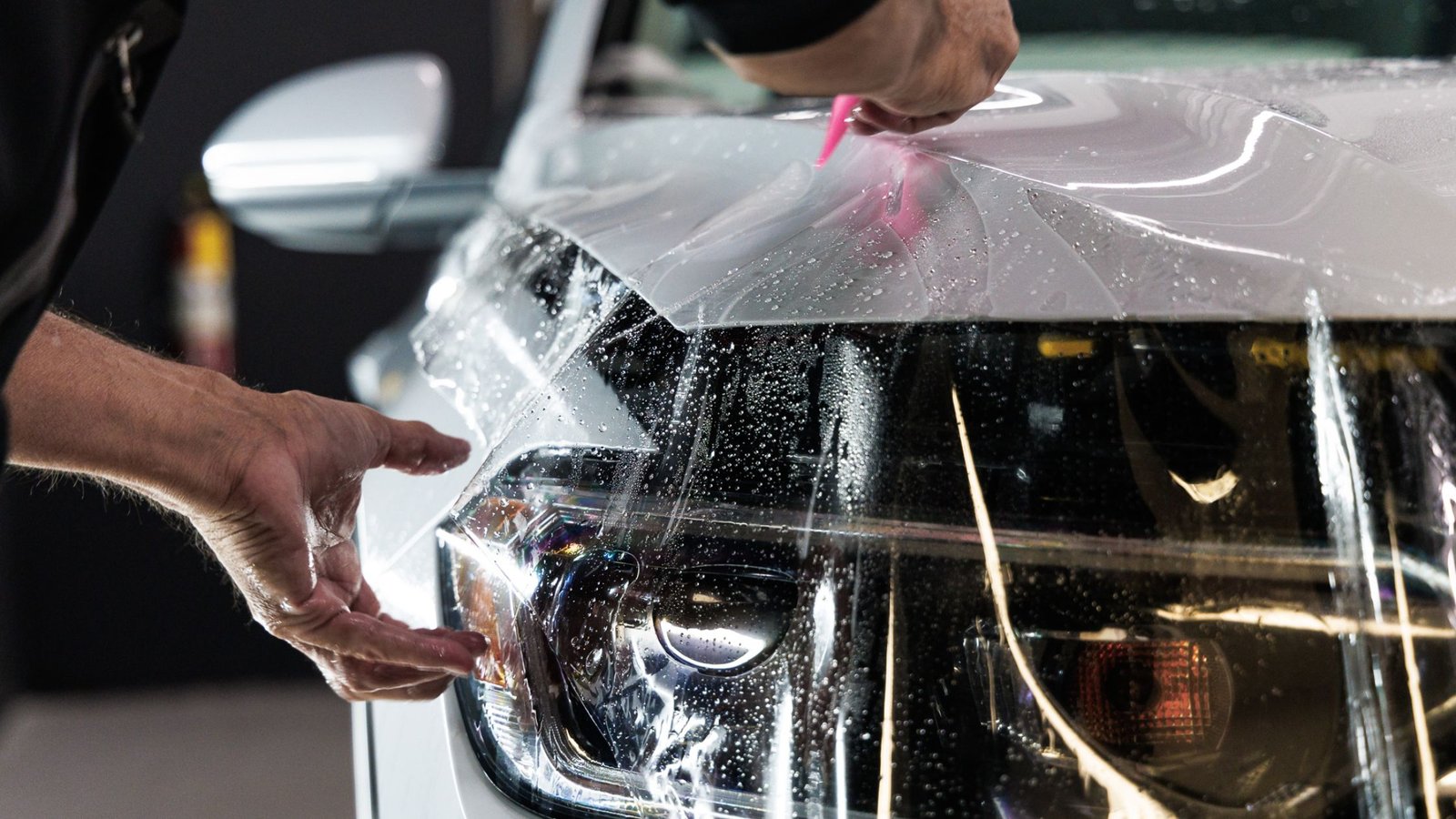
Step 3: Precision Custom Plotting and Seamless Wrapping
Using state-of-the-art design software, templates are plotted specifically for your vehicle’s year, make, and model. This ensures a perfect fit without the need for cutting film directly on your vehicle’s paint with a razor blade. The templates are printed, carefully aligned on the car, and installed using a specialized slip solution, with edges wrapped around panels for a seamless, invisible finish.
Step 4: Final Edge Curing and Post-Heat Inspection
After the film is applied, the vehicle is moved to a curing bay where the moisture under the film evaporates. Technicians carefully inspect every corner and wrapped edge to ensure there are no lifting spots or trapped air bubbles. A final post-heating process is completed to lock the adhesive in place, ensuring the installation remains secure for years of driving.
How Long Does Paint Protection Film Last on a Daily Driver?
A professional-grade paint protection film typically lasts between 7 to 10 years when cared for properly. The actual lifespan of the film is influenced by the quality of the product used, environmental exposure, and how the vehicle is maintained. Premium films are engineered with highly durable UV inhibitors that prevent yellowing, cracking, and peeling over their lifetime.
How you care for your protected vehicle plays a critical role in the film’s longevity. Hand washing your vehicle using pH-neutral car shampoos and high-quality microfiber wash mitts is highly recommended. Regular maintenance sprays designed for polyurethane can also help keep the self-healing topcoat hydrated and performing at its best.
Conversely, using automatic brush car washes can reduce the lifespan of your protection. The harsh, abrasive nylon brushes used in these facilities can damage the edges of the film and wear down the self-healing topcoat prematurely. Parking your car in a garage or under a carport also helps extend its life by reducing constant exposure to intense sunlight and acid rain.
Frequently Asked Questions About New Car Paint Protection
How long should you wait to put PPF on a new car?
You do not need to wait to put PPF on a new car if it has original factory paint, and it should be installed as soon as possible. Factory paint is fully cured at high temperatures before leaving the assembly line, meaning it is ready for immediate film application. If your vehicle has undergone aftermarket paint repairs, you must wait 30 to 45 days for the paint to fully outgas before applying film.
Can you wash your car immediately after PPF installation?
No, you should wait at least 7 days before washing your vehicle after PPF installation. This waiting period allows the moisture under the film to fully evaporate and the acrylic adhesive to cure completely. Washing the car too soon can force water under the edges of the film, leading to lifting and adhesive failure.
Does PPF hide existing paint scratches and rock chips?
Yes, PPF can hide minor micro-scratches and light swirl marks because its adhesive fills in these microscopic imperfections. However, the film will not hide deep rock chips, gouges, or severe scratches. In fact, applying film over deep chips can trap tiny pockets of air, making the defects look more pronounced.
Will paint protection film yellow or peel over time?
No, modern premium paint protection films are formulated with advanced UV inhibitors that prevent yellowing, cracking, and peeling. Older, lower-quality films used to yellow due to UV exposure, but today’s technology is highly resistant to solar radiation. Choosing a reputable local installer ensures you receive high-performance film backed by a comprehensive manufacturer warranty.
Can PPF be safely removed from a car’s paint later?
Yes, professional-grade PPF can be safely removed from original factory paint without causing any damage. The removal process involves using controlled heat, such as steam, to soften the adhesive layer before gently pulling the film away. It is highly recommended to have a professional shop handle the removal to ensure the clear coat remains completely intact.
Conclusion: Secure Your Automotive Investment Today
Protecting your new vehicle is an essential step in maintaining its aesthetic beauty and long-term resale value. The roads of Central Massachusetts present continuous hazards, making proactive exterior protection a wise choice for any vehicle owner. Investing in a professional-grade shield preserves your factory paint in its most perfect state, giving you total peace of mind during your daily commutes.
Choosing premium PPF in West Boylston ensures that your paint remains flawless, no matter where your travels take you. At Aesthetic Auto Solutions, we specialize in delivering meticulous exterior protection services tailored to the unique needs of local drivers. Our dedicated team of specialists utilizes advanced technology and premium materials to ensure your vehicle receives the absolute highest standard of care on Hartwell Street.