Can PPF Protect Your Vehicle from Road Salt, Rock Chips, and Scratches?
Car owners in Central Massachusetts routinely deal with harsh winters and challenging driving conditions. Between the heavy road salt laid down along Route 12 and the flying gravel kicked up during daily commutes on I-190, vehicle paint is under constant environmental bombardment. If you want to keep your vehicle looking showroom-new, investing in professional ppf in west boylston is the most reliable way to prevent permanent damage. Paint protection film, also known as clear bra, acts as an active physical barrier that absorbs road impacts, resists chemical staining, and seals your original clear coat away from moisture.
Does Paint Protection Film Actually Stop Rock Chips?
Yes, premium paint protection film successfully stops rock chips by absorbing and dispersing the kinetic energy of flying debris. Unlike thin layers of automotive paint or ceramic coatings, PPF is made of highly elastic polyurethane. When a stone strikes the covered surface, the impact is spread across a wider surface area instead of penetrating the paint.
This impact-absorption capability provides reliable protection against rock chips on high-risk panels. Your front bumper, hood, side mirrors, and rocker panels bear the brunt of loose gravel and road salt. By placing a thick, energy-diffusing barrier over these zones, you prevent the paint beneath from cracking.
The Rock Chip Defense Process
- Stage 1: Loose Stone or Debris Impact – High-speed road debris strikes the outer edge of the protected panel.
- Stage 2: Elastomeric Top Layer Engagement – The film’s surface immediately stretches to cushion the initial blow and absorb kinetic energy.
- Stage 3: Polyurethane Core Dispersion – The elastic core layer spreads the remaining impact force laterally across a wide area.
- Stage 4: Preserved Factory Paint – The impact energy dissipates completely, leaving the underlying clear coat and paint completely untouched.
The Physics of Polyurethane Defense
The secret to this protection lies in the molecular makeup of thermoplastic polyurethane. This material is highly flexible and engineered to return to its original shape after stretching.
When a rock strikes an unprotected hood, the brittle paint layer cannot deform to absorb the energy, causing it to chip down to the primer. PPF stretches and flexes under impact, acting like a miniature trampoline that cushions the strike and protects the underlying paint.
This physical defense is crucial when navigating local construction zones or high-speed arterial roads. The stones kicked up by large trucks can easily pit a vehicle’s front end within a single season. Installing a clear bra ensures that those impacts only affect a sacrificial, durable layer rather than your factory clear coat.
Does Paint Protection Film Prevent Deep Scratches?
Yes, high-quality film is highly effective at preventing everyday scratches and surface swirl marks. The film is built with a specialized elastomeric top layer that keeps your car’s exterior looking pristine. This advanced chemical engineering allows the material to self-heal when exposed to mild heat.
Utilizing a scratch-resistant paint protection film ensures that micro-abrasions, brush marks, and wash-induced swirl marks vanish over time. When the vehicle is parked in the sun or washed with warm water, the molecules in the top layer automatically reform.
The Self-Healing Sequence
- Step 1: Micro-Scratch or Swirl Mark Occurs – Wash mitts, abrasive dirt, or light brushes create microscopic scratches in the top layer.
- Step 2: Elastomeric Polymer Compression – The polymer material is compressed and pushed aside, but the molecular chains do not tear or break.
- Step 3: Thermal Activation – The film is exposed to external heat, such as warm water, engine warmth, or natural sunlight.
- Step 4: Molecular Realignment – The heat causes the polymer chain to relax and naturally flow back into its original, perfectly flat shape.
Understanding Self-Healing Chemistry
The self-healing topcoat is made from a highly advanced polymer structure that has a physical memory. When the surface gets scratched, the polymer is compressed but not fully torn or broken.
Applying heat causes a chemical reaction that relaxes the polymer chains, allowing them to flow back into their original, perfectly flat state. This process can be repeated hundreds of times over the lifespan of the film.
- Sunlight Exposure: Parking your car outside on a warm summer afternoon is often enough to trigger the self-healing process.
- Warm Water Rinses: Pouring warm water over the affected panels immediately heals micro-scratches in your driveway.
- Engine Heat: The ambient heat radiating from your engine hood helps keep the front-facing film smooth and scratch-free.
While PPF cannot protect against deep, deliberate vandalism like a key gouge that punctures the entire urethane layer, it handles daily wear and tear effortlessly. It prevents your car from developing the hazy, spiderweb look that often ruins a paint finish over time.
Why is Road Salt a Major Threat to Unprotected Paint?
Road salt is highly destructive because it acts as a chemical catalyst that accelerates rust and clear coat oxidation. When winter road salt mixes with melting snow and ice, it forms a highly corrosive brine solution. This liquid easily clings to your vehicle’s rocker panels, wheel arches, and front bumper.
Without proper protection, this chemical mixture seeps into micro-cracks and tiny rock chips in your paint. Once the salt brine makes contact with the bare metal beneath, a chemical reaction occurs that rapidly creates rust.
The Chemical Process of Salt Damage
- Step 1: Moisture Infiltration: Melting winter slush carries dissolved sodium chloride and calcium chloride into existing paint chips.
- Step 2: Chemical Reaction: The salt acts as an electrolyte, speeding up the oxidation process between oxygen, water, and the steel body panels.
- Step 3: Rust Expansion: As iron oxidizes, it expands to several times its original volume, causing the surrounding paint to blister, bubble, and flake away.
- Step 4: Structural Corrosion: If left untreated, the rust eats deeper into the body panels, creating permanent structural damage that requires expensive bodywork.
This destructive cycle is why winter driving in New England is so notoriously hard on vehicles. The heavy application of liquid brines on major commuter routes creates a constant mist of corrosive chemicals. Protecting your vehicle with a clear bra seals the paint completely, keeping the salt brine from ever making contact with your clear coat.
Is PPF in West Boylston the Best Defense Against Local Road Hazards?
When considering the long-term value of ppf in west boylston, drivers need a solution that handles extreme local weather patterns. Central Massachusetts experiences heavy snowfall, freezing rain, rapid temperature swings, and gravel-covered roads throughout the winter and spring.
The heavy winter sand and salt distribution on local routes like Route 140 make everyday driving hazardous to your vehicle’s finish. A professional clear bra application provides unmatched vehicle protection from road debris by acting as a continuous, impenetrable armor.
The Multi-Threat Protection Cycle
- Environmental Assault – Road salt brine, flying gravel, and intense ultraviolet radiation bombard the front of your moving vehicle.
- The Impenetrable Barrier – The paint protection film absorbs the physical impact, deflects chemical compounds, and filters out UV rays.
- The Protected Surface – Your factory clear coat remains fully sealed and pristine, maintaining its original paint quality underneath.
Local Weather Challenges
The local climate demands a defense system that remains flexible across a wide temperature range. Winters in Worcester County routinely drop below freezing, while summers can bring intense heat and humidity.
Cheaper, low-grade protection films can become brittle and crack during freezing winter nights. Premium polyurethane films are specifically engineered to remain highly elastic, allowing them to expand and contract naturally with your vehicle’s panels.
- Sub-Zero Elasticity: The film stays flexible in freezing winter temperatures, ensuring it will not crack or peel when struck by road debris.
- UV Protection: Built-in UV inhibitors prevent the film from yellowing or clouding under the summer sun near the Wachusett Reservoir.
- Chemical Resistance: The non-porous topcoat blocks bird droppings, acid rain, and tree sap from etching into the paint finish.
Choosing local protection ensures your car is prepared for commutes along Route 12 or daily travel on I-190. The physical barrier prevents road grit from blasting away your clear coat, keeping your vehicle looking brand-new for years to come.
Comparing Paint Protection Options for New England Drivers
To help you make an informed decision for your vehicle, it is useful to compare how different paint protection products perform against common environmental hazards. While there are several protective solutions available, they offer vastly different levels of durability and impact defense.
Traditional waxes, modern ceramic coatings, and premium paint protection films each serve a specific purpose. Understanding these differences allows you to choose the right strategy for your driving habits.
The following table outlines the protective performance and characteristics of these popular options:
| Protection Type | Physical Chip Defense | Chemical & Salt Resistance | Swirl Mark Prevention | Average Lifespan |
| Traditional Car Wax | None | Low (Short-term) | None | 1 to 3 Months |
| Professional Ceramic Coating | Minimal | Exceptional (Long-term) | Moderate | 2 to 5 Years |
| Paint Protection Film (PPF) | Exceptional | Exceptional (Long-term) | Maximum (Self-Healing) | 5 to 10 Years |
While ceramic coatings provide a highly hydrophobic surface that easily sheds dirt and chemical contaminants, they cannot absorb physical impacts from road debris. For maximum protection, local drivers often opt to install paint protection film on high-impact areas and coat the remaining panels with a ceramic sealant.
How Installers Apply PPF for Maximum Coverage
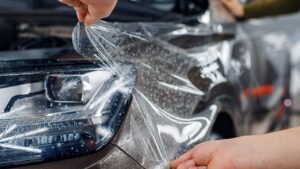
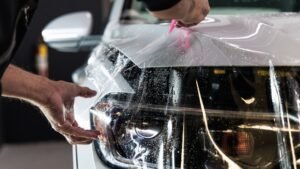
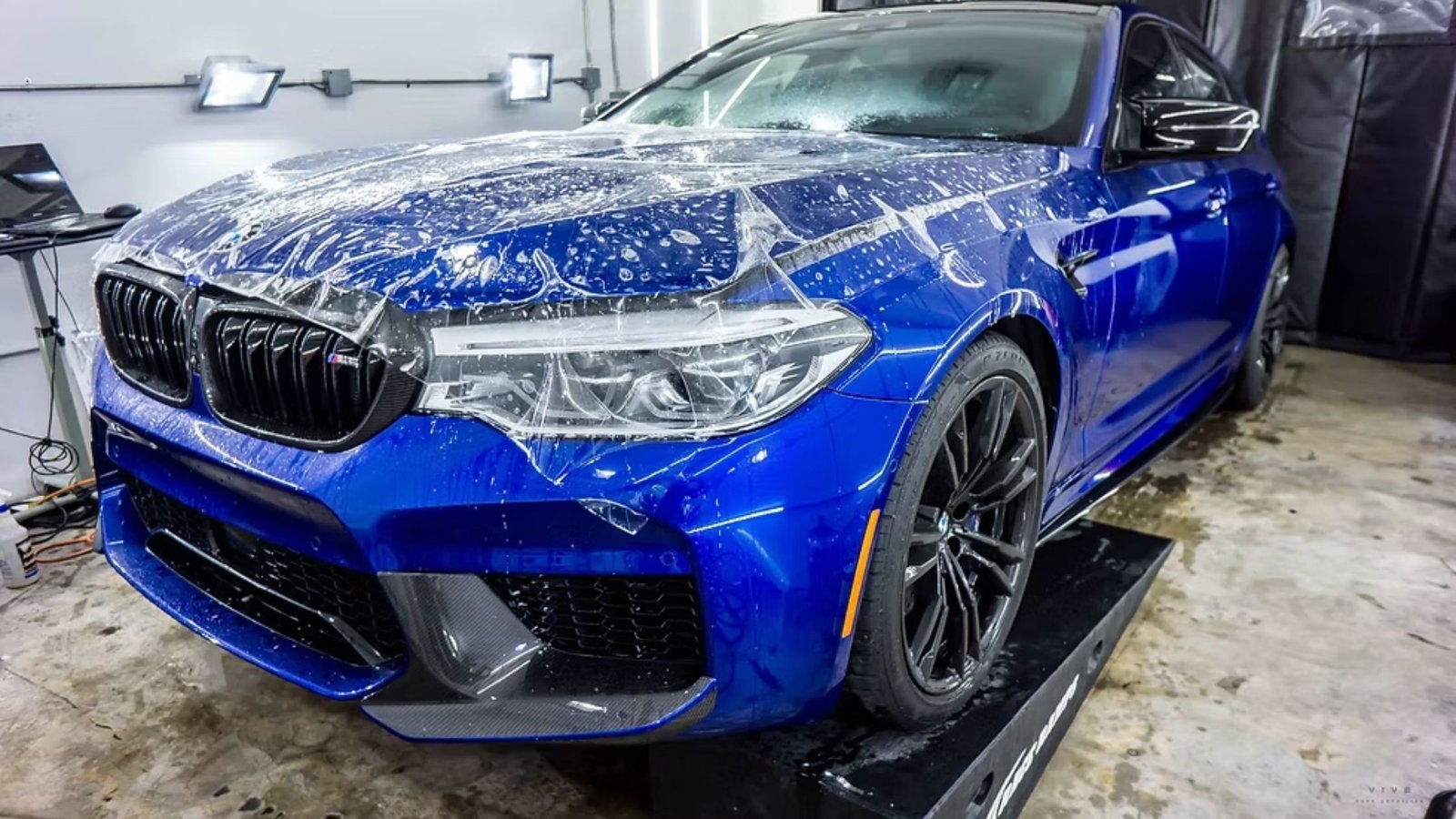
The durability and performance of your paint protection film depend heavily on the precision of the installation process. Professional application requires a clean, temperature-controlled environment and highly trained technicians to guarantee a seamless bond.
Applying a clear bra is a multi-step process that requires deep paint preparation to ensure the adhesive cures correctly. This preparation is critical to preventing the film from lifting at the corners over time.
Step 1: Deep Chemical Decontamination
Before applying the film, the vehicle must be completely free of road grime, iron deposits, and wax. Installers perform a multi-stage wash using specialized iron removers and a clay bar treatment to pull embedded contaminants out of the clear coat pores.
Step 2: Precision Paint Correction
Any scratches, swirls, or oxidation left on the paint will be permanently locked beneath the film. Technicians perform a professional machine polish to restore maximum clarity and gloss before the film is applied.
Step 3: Computer-Cut Pattern Plotting
Using advanced design software, the installer cuts the film to the exact dimensions of your vehicle’s panels. This precise plotting ensures that the film fits perfectly around badges, parking sensors, and body lines without the need for hand-cutting on the vehicle’s paint.
Step 4: Fluid Application and Squeegee Alignment
The film is applied using a specialized slip solution that allows the technician to slide the material into perfect alignment. Once positioned, a squeegee is used to press out the fluid, activating the pressure-sensitive acrylic adhesive beneath.
To ensure your vehicle receives this precise treatment, you can contact us to review custom coverage options for your specific make and model. Proper preparation ensures that the edges of your film remain completely sealed against high-pressure water and winter road brines.
Frequently Asked Questions About Paint Protection Film
Does PPF protect against rock chips?
Yes, high-quality paint protection film provides exceptional defense against flying rock chips. The thick, elastomeric polyurethane layer is specifically engineered to absorb and disperse the impact energy of road debris, preventing stones from reaching your factory clear coat.
Can road salt damage paint protection film?
No, road salt and liquid de-icing chemicals will not degrade premium paint protection film. The film is chemically resistant to harsh road salts, though you should still wash your vehicle regularly during winter to prevent dry salt build-up from dulling the film’s glossy finish.
How does self-healing PPF technology work?
Self-healing film features a specialized elastomeric polymer topcoat that has a physical memory. When the surface receives micro-scratches or swirl marks, exposing the film to heat from the sun or warm water causes the molecules to reform into their original, smooth layout.
Will cold New England weather cause the film to peel?
No, professionally installed premium film is engineered to remain highly flexible in freezing temperatures. It will not crack, bubble, or peel during harsh Worcester County winters, provided the surface was correctly prepared and the film edges were properly wrapped.
Can you wash a car with PPF at an automatic car wash?
You should avoid using automatic car washes that feature spinning nylon brushes, as they can lift the edges of the film and cause micro-scratches. Hand washing or using touchless automatic washes is the safest way to maintain your film and extend its overall lifespan.
Protect Your Investment in Central Massachusetts
Navigating the changing seasons in Holden, Sterling, and West Boylston requires a proactive approach to automotive preservation. While winter road salt and spring gravel can quickly destroy a vehicle’s factory paint, high-quality paint protection film offers an incredibly durable defense. By choosing to install premium ppf in west boylston, you ensure that your vehicle remains shielded against physical and chemical road hazards for up to ten years.
At Aesthetic Auto Solutions, we deliver professional, detail-oriented vehicle protection services designed to handle the harshest New England conditions. Our certified technicians use industry-leading films and precision installation techniques to ensure your clear bra is completely seamless and incredibly long-lasting. Let us help you protect your automotive investment, maintain your vehicle’s resale value, and drive with complete confidence through every season.