Does Your Daily Commute Make PPF in West Boylston a Smart Investment?
Navigating the daily commute in Central Massachusetts is a stressful test of endurance for both you and your vehicle. Every single mile traveled exposes your vehicle’s fresh paint to physical impacts from highway debris, loose gravel, and winter road salt. For vehicle owners seeking to maintain their vehicle’s showroom look, installing premium ppf in west boylston acts as an invisible defensive shield. This transparent layer of polyurethane absorbs the brunt of daily travel, ensuring your investment remains protected against the harsh realities of local highways.
Is PPF worth it on a daily driver?
Yes, paint protection film is absolutely worth it for a daily driver because it serves as the only physical barrier capable of absorbing impacts from road debris and preventing rock chips. Unlike delicate factory paint, high-grade film preserves the underlying clear coat from permanent physical degradation. Over several years of commuting, this protection easily pays for itself by preventing expensive repainting costs and maintaining a much higher vehicle resale value.
Commuter vehicles endure far more environmental exposure than weekend show cars. When you drive thirty or forty miles a day, your car experiences thousands of microscopic impacts from airborne contaminants. Over time, these impacts turn a smooth factory finish into a rough, pitted surface that looks dull and worn out.
Automotive clear coats have become softer over the last two decades due to environmental regulations mandating water-based paints. These softer formulas are incredibly susceptible to scratching, chipping, and chemical etching. By installing a robust protective film, you address this vulnerability directly with a durable sacrificial layer.
Additionally, the cost of cosmetic repairs has risen significantly. Repainting a single bumper or hood to repair paint chips can cost thousands of dollars at a professional body shop. Even worse, aftermarket repainting rarely matches the exact color and quality of the factory finish, which can hurt your vehicle’s market value. Implementing paint protection for daily drivers early in your ownership cycle is a proactive financial decision that safeguards your vehicle from these inevitable costs.
Why Commuters Need PPF in West Boylston to Save Their Paint
Investing in ppf in west boylston is a highly logical choice for local drivers because the local regional environment presents continuous threats to automotive paint. The unique geographical features of Central Massachusetts mean that commuter vehicles are exposed to harsh conditions during every season of the year. Local highways and secondary roads carry high volumes of commercial traffic, which continuously kicks up abrasive debris.
The daily route for many local commuters involves traveling along high-speed corridors like Route 12, Route 140, and Interstate 190. These roads are heavily utilized by heavy commercial trucks, dump trucks, and construction vehicles. These vehicles frequently drop small pebbles, sand, and asphalt fragments directly into the path of your vehicle, causing immediate and noticeable paint chips on your bumper, hood, and fenders.
Winter conditions in Worcester County make daily driving even more hazardous. Municipal salt trucks coat local roads with highly abrasive sand, rock salt, and liquid calcium chloride. When kicked up by surrounding traffic, these materials act like sandblasters against your front bumper and side mirrors. The chemically aggressive salt mixtures also cling to tiny paint chips, accelerating the formation of rust and oxidation on exposed metal panels.
Local environmental hazards are not limited to winter road debris. Commuters who park near the West Boylston Town Common or travel past the dense tree canopies surrounding the Wachusett Reservoir face constant organic hazards. Acidic bird droppings, sticky tree sap, and organic pollen can etch into an unprotected clear coat within a few hours of exposure, leaving permanent chemical stains.
Understanding PPF for Commuter Vehicles and How It Works
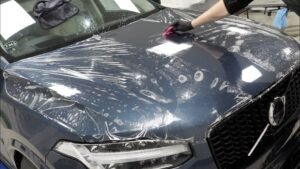
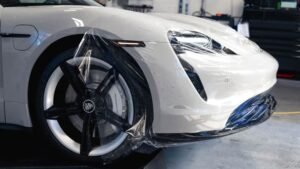
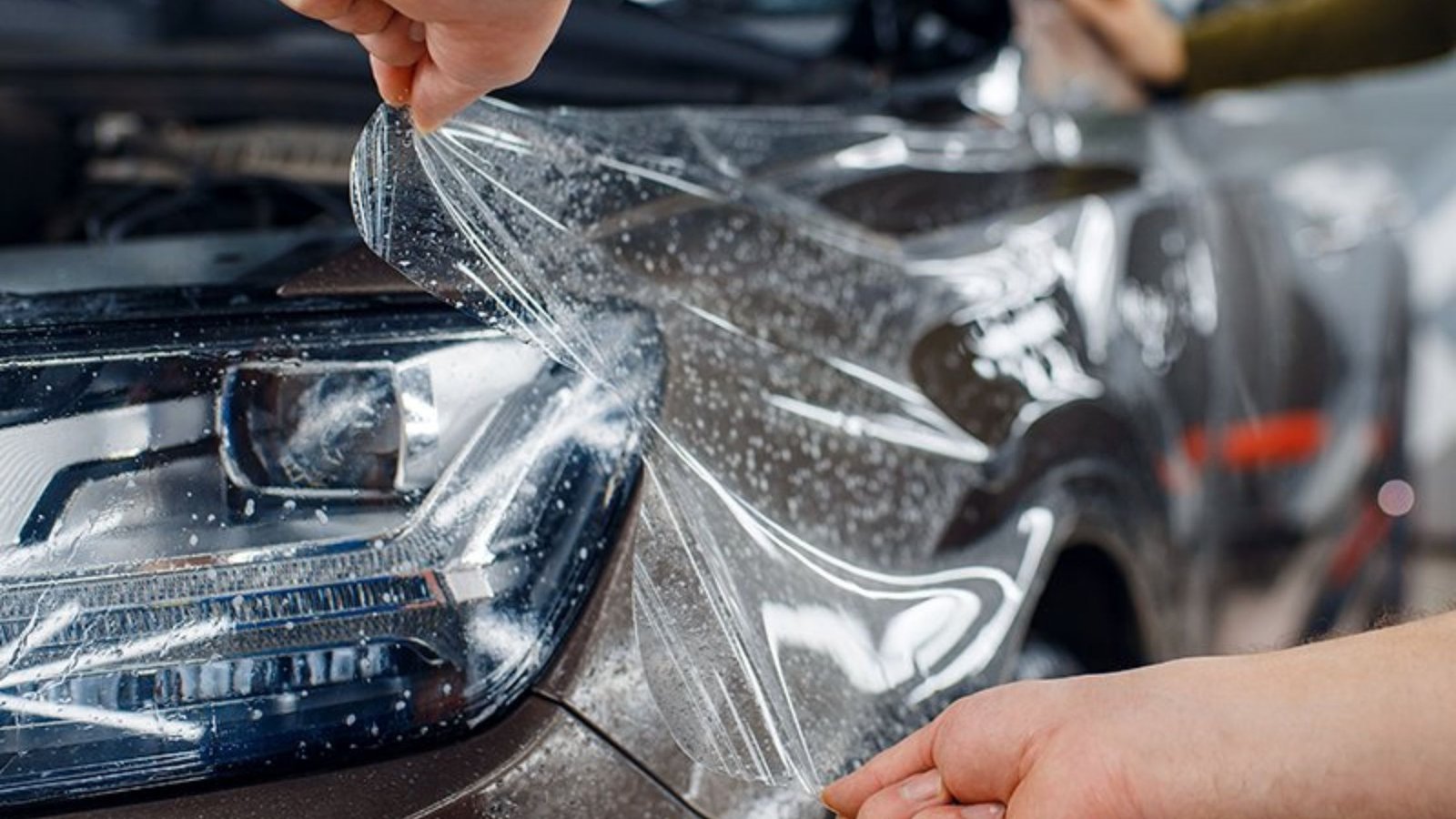
Choosing high-quality PPF for commuter vehicles provides an advanced, multi-layered defense system that physically shields the delicate paint surface. Modern paint protection film, often called a clear bra, is constructed from premium elastomeric polyurethane polymers. This advanced material is incredibly tough yet highly flexible, allowing it to stretch and absorb energy without tearing or losing its structural integrity.
The true secret behind the performance of modern film lies in its multi-layered design:
- Self-Healing Topcoat: The outermost layer consists of a specialized polymer that reacts to heat. If the film receives light scratches or washing swirls, warm water or ambient sunlight triggers the polymers to reform, completely erasing the defects.
- Polyurethane Core: The thick middle layer is engineered to disperse the kinetic energy of flying rocks, pebbles, and road debris, preventing the impact force from cracking the underlying paint.
- Acrylic Adhesive: The bottom layer features a high-performance acrylic adhesive that bonds securely to the clear coat, preventing lifting at the edges while remaining safe for future removal.
When a small stone strikes an unprotected vehicle panel, the energy concentrated on that tiny point instantly cracks the brittle factory paint. When the same stone strikes a panel protected by clear film, the elastic properties of the polyurethane absorb and distribute the force across a wider surface area. This completely neutralizes the impact, leaving the actual paint beneath untouched and pristine.
Paint Protection Film vs. Ceramic Coatings: Which is Best for Daily Commutes?
While both options provide exceptional enhancement and protection, paint protection film is the only solution designed to prevent physical impact damage, whereas ceramic coatings focus on chemical resistance and gloss. Commuters who face heavy road debris require the physical thickness of a polyurethane film to stop rock chips. Ceramic coatings are excellent for keeping your car clean, but their microscopic thickness cannot absorb physical impacts.
Understanding the specific differences between these two premium services helps daily drivers select the perfect combination for their driving habits. Many owners of commuter cars choose to apply film to high-impact areas and use ceramic coatings on the remaining panels. This hybrid approach delivers the best of both worlds, keeping maintenance simple while blocking physical hazards.
| Protective Feature | Paint Protection Film (PPF) | Ceramic Coating |
| Physical Impact Resistance | Outstanding (Absorbs stones and gravel) | Minimal (Cannot prevent rock chips) |
| Self-Healing Properties | Yes (Erases light scratches with heat) | No (Requires polishing to remove scratches) |
| UV and Heat Protection | High (Prevents yellowing and paint fading) | High (Prevents oxidation and clear coat failure) |
| Hydrophobic Properties | Moderate (Improved with specialized topcoats) | Extreme (Repels water, dirt, and road grime) |
| Average Lifespan | 7 to 10 years | 2 to 5 years |
| Primary Goal | Physical armor against road hazards | High-gloss shine and easy vehicle washing |
Why Professional PPF Installation Beats DIY Projects
Securing a professional PPF installation is absolutely vital because applying polyurethane film is an incredibly complex, unforgiving process that requires specialized tools and years of experience. Amateur attempts at installation often result in visible alignment errors, trapped dirt particles, silvering marks, and peeling edges. A certified technician utilizes controlled indoor environments and custom-designed templates to ensure a completely seamless and invisible finish.
If you are ready to shield your commuter vehicle from the harsh roads of Central Massachusetts, you can contact us to speak with our highly skilled team of preservation specialists.
A professional installation relies on a meticulous, multi-stage workflow to guarantee the film bonds perfectly to the clear coat. Any shortcut taken during the preparation phases will result in permanent defects locked beneath the film.
Phase 1: Intensive Paint Decontamination
The vehicle must undergo a multi-step decontamination process to remove road grime, iron deposits, rail dust, and old waxes. This involves a thick snow foam bath, a meticulous hand wash, and a clay bar treatment to pull embedded contaminants out of the microscopic pores of the clear coat.
Phase 2: Professional Paint Correction
Before any film can be applied, the clear coat must be polished to a flawless state. Dual-action machine polishers and specialized compounds are used to remove swirl marks, water spots, and light scratches. Leaving these defects on the paint would compromise the visual clarity of the transparent film.
Phase 3: Computer-Cut Pattern Plotting
Professional shops utilize specialized design software to plot templates that match the exact contours, emblems, and parking sensors of your specific year, make, and model. This computer-aided plotting eliminates the need to cut film directly on your vehicle’s paint with razor blades, removing the risk of accidental paint gouges.
Phase 4: Precision Slip and Squeegee Application
Technicians apply a specialized slip solution to slide the film into perfect alignment on each panel. Using custom squeegees, they carefully extract the fluid from beneath the film, working from the center outward to secure the adhesive. The edges of the film are then wrapped around the back of the panels for a completely hidden, seamless look.
Frequently Asked Questions About Commuter Car Protection
Does PPF protect against parking lot scratches and door dings?
Yes, high-quality film provides excellent protection against light parking lot scratches, shopping cart scrapes, and minor door scuffs. While it cannot prevent structural metal dents from heavy impacts, it will prevent the paint from cracking, chipping, or transferring color during minor scrapes.
Will paint protection film yellow or fade on a commuter car?
No, modern premium polyurethane films are engineered with advanced UV stabilizers that completely resist yellowing and fading. Older films from decades ago used to yellow due to exposure to direct sunlight, but today’s high-performance products remain optically clear for up to ten years.
How do you wash a commuter car that has PPF installed?
You should hand wash your vehicle using a pH-neutral car shampoo, high-quality microfiber wash mitts, and the classic two-bucket method. Avoid running your car through automatic car washes with spinning nylon brushes, as these harsh facilities can damage the edges of the film and wear down the self-healing topcoat.
How long does paint protection film last under harsh winter conditions?
A professional-grade film will easily last between 7 to 10 years, even when exposed to severe Central Massachusetts winter weather. The durable adhesive and robust polyurethane core are specifically designed to withstand freezing temperatures, heavy road salt, and continuous moisture without cracking or peeling.
Can PPF be easily removed if I decide to sell my vehicle?
Yes, professional-grade film can be safely removed at any point without causing damage to original factory paint. Technicians utilize controlled heat and steam to soften the acrylic adhesive, allowing the film to be pulled away cleanly without leaving heavy residue on the clear coat.
Conclusion: Protect Your Daily Commute and Your Vehicle’s Value
Your daily commute does not have to result in a worn-out, rock-chipped front bumper that ruins the visual appeal and resale value of your vehicle. By choosing to invest in a high-grade clear bra, you establish a highly durable, self-healing barrier that keeps your clear coat looking flawless for years of travel. This physical protection is the single most effective way to maintain your vehicle’s appearance and secure its long-term financial value.
When you are ready to experience the ultimate standard of automotive preservation, choosing ppf in west boylston ensures that your vehicle is prepared for any local road hazard. At Aesthetic Auto Solutions, we specialize in delivering meticulous vehicle protection services from our professional facility located right on Hartwell Street. We are incredibly proud of our commitment to excellence and maintain a perfect 5 star google rating as of today, helping local daily drivers navigate their commutes with complete peace of mind.