Expert Guide: Choosing a Paint Correction Service in West Boylston
Finding a qualified professional for paint correction in West Boylston is the most important decision a car enthusiast can make when attempting to restore their vehicle’s finish. In Central Massachusetts, the combination of aggressive road salts used on I-190 and the industrial fallout found near the local business districts can wreak havoc on a vehicle’s clear coat. Unlike a standard detail, paint correction is a permanent surgical procedure for your car’s exterior that requires a high level of technical skill, specialized lighting, and precision instruments. By selecting a service provider who understands the unique environmental stressors of the Wachusett Reservoir area, you ensure that your vehicle receives a customized treatment that doesn’t just hide defects but removes them entirely.
How do I choose the best paint correction service in West Boylston?
To choose the best service, you should look for a provider that utilizes professional-grade lighting, paint thickness gauges, and has a portfolio of documented multi-stage corrections. A reputable shop will always begin with a thorough inspection under high-intensity LED lights that mimic natural sunlight to reveal the true extent of swirl marks and scratches. You should also verify that the technician uses a “clean room” environment to prevent dust from contaminating the polishing pads during the process. Furthermore, ensure they are using modern abrasive technology that doesn’t rely on fillers or heavy oils to temporarily mask imperfections, which would otherwise reappear after a few washes.
Evaluating Facility Standards and Lighting
The environment where the work is performed is a direct indicator of the quality you will receive. A professional studio should be indoors, climate-controlled, and equipped with specialized “scangrip” lighting arrays. These lights are essential because they allow the technician to see the microscopic edges of clear coat defects that are invisible to the naked eye. If a shop attempts to perform correction in a driveway or a dimly lit garage, they are essentially working blind, which increases the risk of “burning” through the paint or leaving behind unsightly holograms.
Verification of Technical Skill and Experience
Experience is paramount when it comes to mechanical abrasion. Ask the provider about their experience with different paint systems, as the “soft” paint on a Japanese import requires a completely different approach than the “hard” ceramic clears found on European luxury vehicles. A true expert will be able to explain their choice of pads and compounds based on the specific hardness of your vehicle’s finish. When you are choosing a detailing expert, always request to see “50/50” shots where one half of a panel is corrected and the other is left original to prove the effectiveness of their process.
What are the key paint correction service tips for car owners?
The most important paint correction service tips include managing your expectations regarding deep scratches and ensuring you have a plan for protection after the service is complete. You must understand that while correction removes 80% to 99% of surface defects, any scratch that you can catch with a fingernail is likely through the clear coat and cannot be fully polished out. It is also vital to avoid automatic car washes immediately after the service, as the abrasive brushes will instantly reintroduce the very swirl marks you just paid to have removed.
Preparation is also a key factor in the success of the service. A professional provider will always include a multi-stage decontamination process before any machine touches the paint. This includes a chemical iron fallout removal and a clay bar treatment to ensure the surface is perfectly smooth. To get the best results, you should view our service options and schedule a consultation to discuss which level of correction matches your vehicle’s specific history and your long-term goals.
Understanding the Stages of Correction
- Stage 1 (Enhancement): Focuses on a single-step polish to improve gloss and remove very light hazing.
- Stage 2 (Correction): Uses a heavy cutting compound followed by a finishing polish to remove moderate swirls.
- Stage 3 (Restoration): A multi-step process for severe defects, often involving heavy compounding and refining.
Is paint correction in West Boylston a permanent fix?
Professional paint correction in West Boylston is a permanent fix because it physically removes the defective layer of clear coat rather than just filling it in with temporary glazes. Once the surface is leveled and the scratches are gone, they will not return on their own; however, the paint is now “naked” and requires a high-quality sealant or ceramic coating to prevent new damage. Because the local climate near Route 12 and the Worcester border is so variable, maintaining that corrected finish requires a strict two-bucket hand-washing method to ensure that dirt is never dragged across the pristine surface.
The longevity of your results depends entirely on your maintenance routine. Even the most perfect correction can be ruined in a single trip through a “touch” car wash. For owners who want to preserve their investment, it is highly recommended to pair the correction with a long-term protective barrier. To find out more about how to maintain your vehicle’s new appearance, you should reach out to a professional to discuss your specific vehicle requirements and establish a safe maintenance schedule.
Why are certified auto detailers preferred for this work?
Hiring certified auto detailers is preferred because it ensures the technician has undergone rigorous training in paint chemistry, abrasive technology, and machine handling. Certification from organizations like the International Detailing Association (IDA) means the professional understands the “Point of No Return”—the thin line between a perfect finish and a ruined clear coat. This is particularly important for modern vehicles with thin factory paint, where there is very little room for error during the compounding phase.
A certified professional will also use a paint thickness gauge (PTG) to measure the total depth of the paint system before they begin. This tool is non-negotiable for high-end work, as it tells the technician how much clear coat is available to work with. If a vehicle has been corrected multiple times in the past, a PTG might reveal that there isn’t enough material left for another heavy correction, in which case a safer “enhancement” would be recommended instead.
The Risks of Non-Certified “Buffing”
- Paint Burn: Friction heat that melts the clear coat, requiring a total repaint.
- Holograms: Ghost-like trails left by improper rotary machine use.
- Pigtails: Deep circular scratches caused by trapped dirt in a polishing pad.
- Thinning: Removing too much clear coat, leading to premature UV failure and “peeling.”
How does local weather in West Boylston impact paint health?
The local weather in West Boylston is particularly taxing on automotive paint due to the extreme temperature swings and the corrosive atmosphere. During the summer, the UV index can be high enough to cause “chalking” or oxidation on vehicles parked near open areas like the West Boylston town common. In the winter, the liquid brine used on I-190 and Route 110 contains calcium chloride, which is far more aggressive than traditional rock salt and can etch into the clear coat if left to sit.
These environmental factors create a “pitting” effect on the paint that cannot be washed away. Over time, these pits trap dirt and make the paint look dull and gray. Correction is the only way to “smooth out” these microscopic craters and restore the surface’s ability to reflect light. If you are noticing that your car’s color looks muted after a long winter, you should get in touch with our team today to see how we can restore the original depth and clarity of your vehicle’s finish.
Comparing Professional Correction vs. DIY Polishing
| Feature | DIY Polishing | Professional Paint Correction |
| Tools | Hand pads or basic orbital | High-torque DA/Rotary machines |
| Decontamination | Basic wash | Iron removal & Clay bar |
| Defect Removal | 10% – 20% | 80% – 99% |
| Lighting | Sunlight / Flashlight | High-CRI LED Arrays |
| Surface Safety | Low risk (low results) | Managed risk (professional results) |
| Protection | Retail wax | Professional Grade Coatings |
What are the steps involved in a professional correction process?
A professional correction process is a multi-day undertaking that starts with a “chemically pure” surface. The first step involves a strip wash to remove old waxes, followed by an iron decontaminant that turns purple as it dissolves embedded brake dust. Next, a clay bar is used to remove any remaining bonded contaminants like tree sap or industrial fallout from the business districts around West Boylston Street. Only then can the machine work begin.
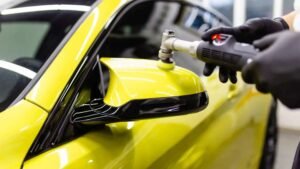
The polishing stage itself is a game of “test spots.” A professional doesn’t just start buffing the whole car; they pick a small area to test different combinations of pads and chemicals to find the “least aggressive” method that still achieves the desired results. Once the optimal combination is found, the technician works panel by panel, frequently cleaning their pads and checking their work with an LED inspection lamp to ensure total defect removal.
How to prepare your vehicle for a paint correction service?
To prepare your vehicle, you should ensure that any major body damage or deep rock chips are addressed beforehand. While correction fixes the clear coat, it will not fix dents or missing paint. It is also helpful to have the vehicle as clean as possible, though the professional will perform their own deep decontamination anyway. More importantly, you should be prepared to leave the vehicle for at least 24 to 48 hours, as a high-quality multi-stage correction cannot be rushed.
During the drop-off, a professional will walk around the vehicle with you to point out existing defects and areas of concern, such as thin paint on the plastic bumpers or deep scratches near the door handles. This transparency is a hallmark of a high-quality service provider. If you have questions about the logistics of the service or how to get your vehicle to our studio from nearby Sterling or Worcester, you should view our service options and schedule a consultation to finalize your plans.
Frequently Asked Questions
What is the most important thing when choosing a detailing expert?
The most important factor is the detailer’s ability to demonstrate their results through high-resolution photography and their use of professional diagnostic tools like paint thickness gauges and specialized lighting.
How do I find certified auto detailers in West Boylston?
Look for providers who prominently display their certifications from the IDA or specific product manufacturers like Gtechniq or Ceramic Pro. These certifications guarantee a baseline of knowledge and professional ethics.
Can paint correction remove deep scratches?
It can remove scratches that are limited to the clear coat. If a scratch has reached the color (base) coat or the primer, it cannot be polished out and will require a traditional body shop repair or touch-up paint.
What are the best paint correction service tips for aftercare?
Avoid automatic car washes, use a high-quality microfiber drying towel, and apply a spray sealant every few months if you do not have a permanent ceramic coating. The goal is to minimize friction on the paint.
Is paint correction in West Boylston safe for new cars?
Yes, many new cars delivered to local dealerships near Route 12 actually arrive with “dealer-installed” swirl marks from improper pre-delivery inspections. A light “new car” correction is often necessary to achieve a truly perfect finish.
Conclusion
Securing a high-quality paint correction in West Boylston is an investment in your vehicle’s longevity and aesthetic appeal. By prioritizing specialized lighting, certified expertise, and a facility that respects the technical demands of clear coat restoration, you ensure that your vehicle stands out on the roads of Central Massachusetts. Whether you are driving through the scenic routes near the Wachusett Reservoir or commuting through the busy Worcester corridors, a corrected finish provides a level of depth and clarity that simply cannot be achieved through traditional cleaning methods. Protecting your investment from the harsh local elements is a full-time commitment, and professional correction is the cornerstone of that effort.
Aesthetic Auto Solutions is the premier choice for owners who refuse to compromise on the quality of their vehicle’s finish. As a trusted local service provider, we specialize in the advanced restoration techniques needed to solve the problems of oxidation, swirl marks, and environmental etching once and for all. We provide the certified expertise and meticulous attention to detail required to transform your car into a masterpiece that looks better than the day it left the factory.