Is Ceramic Coating Worth It Compared to Waxing or Sealants?
The direct answer to whether ceramic coating is worth the investment is a resounding yes for most vehicle owners because it offers a permanent or semi-permanent covalent bond that traditional waxes simply cannot match. While a high-quality carnauba wax provides a temporary glow that lasts only a few weeks, professional ceramic coating services utilize advanced nanotechnology to create a sacrificial layer of Silicon Dioxide (SiO2) that shields your paint for years. In 2026, car owners are increasingly moving away from the monthly cycle of waxing and toward these durable coatings because they offer superior resistance to UV rays, acidic bird droppings, and industrial fallout. By choosing a ceramic layer, you are not just buying a shiny car; you are investing in long-term protection that preserves the structural integrity of your clear coat and significantly reduces the labor required for routine maintenance. This shift in automotive care reflects a demand for higher efficiency and better protection against the increasingly harsh environmental factors that modern vehicles face daily.
Is ceramic coating really better than wax?
The efficacy of ceramic coating services becomes clear when you analyze the molecular difference between a coating and a traditional wax or sealant. Wax is a natural substance that essentially sits on top of the paint, filling in small gaps but remaining vulnerable to heat and detergents. A ceramic coating, however, uses nanotechnology to fill the microscopic pores of the clear coat, creating a surface that is physically smoother and chemically bonded to the vehicle.
This chemical bond is what allows the coating to remain active for three to five years, whereas a traditional wax begins to degrade the moment the car is exposed to the sun or a standard car wash. Most Birmingham residents find that the heat of an Alabama summer is enough to melt away a standard wax in just a few weeks. A ceramic shield is impervious to this heat, maintaining its 9H hardness and hydrophobic properties even in the most extreme temperatures.
The comparison also extends to the level of gloss and clarity provided by the different products. While wax provides a “warm” and somewhat oily shine, a ceramic layer offers a “glass-like” or “candy” gloss that is much more reflective. This clarity is due to the purity of the SiO2 particles, which allow light to pass through and bounce off the paint without the distortion often caused by the heavy oils found in traditional carnauba products.
The Long-Term Protection Benefits of Ceramic Technology
One of the most significant long-term protection benefits of ceramic technology is its extreme resistance to chemical etching. Environmental contaminants like bird droppings and tree sap are highly acidic and can eat through a standard wax and into the clear coat in a matter of hours. A ceramic coating provides a much larger window of time to remove these hazards before they can cause permanent damage, as the glass-like shield is much more resistant to acid.
UV protection is another area where ceramic coatings outperform every other option on the market. The sun’s ultraviolet rays are the primary cause of paint oxidation and fading, which can make a relatively new car look aged and neglected. Ceramic coatings act as a high-SPF sunscreen for your vehicle, reflecting these rays away from the pigment and ensuring the color remains as vibrant as the day it was applied.
Hydrophobicity, or the ability to repel water, is perhaps the most famous benefit of the ceramic process. When water hits a ceramic-coated surface, it beads up into tight spheres and rolls off, carrying dust and loose dirt with it. This self-cleaning effect means your car stays cleaner for longer, and the risk of water spotting is greatly reduced compared to a car treated with a basic sealant or wax.
Exploring the Ceramic vs Wax Comparison in Detail
A detailed ceramic vs wax comparison must take into account the frequency of application and the total cost of ownership. While a bottle of wax is inexpensive, the labor required to apply it every six to eight weeks adds up quickly over the life of a vehicle. A single application of a ceramic coating can last for half a decade, effectively eliminating the need for recurring detailing appointments that focus on exterior protection.
Synthetic sealants were long considered the middle ground between wax and ceramic, but they still lack the hardness of a 9H coating. Sealants are made of man-made polymers that provide better durability than wax, often lasting six months, but they do not create a permanent bond. They are still susceptible to being stripped away by aggressive car wash soaps or road salts, leaving your paint vulnerable once again.
If you are currently evaluating your paint protection options and want a professional opinion on which path is right for your specific vehicle and budget, you can contact us to speak with an expert. We take the time to analyze your driving habits and storage conditions to recommend a solution that maximizes your vehicle’s value. Professional guidance ensures you don’t overspend on features you don’t need while securing the best possible finish.
Evaluating the True Ceramic Coating Value
The ceramic coating value is realized most clearly when it comes time to sell or trade in your vehicle. A car that has been ceramic coated since new will possess a clear coat that is significantly thicker and more pristine than a car that has only been waxed. This “perceived value” allows sellers to ask for a premium, as the vehicle clearly demonstrates that it has been meticulously maintained by its owner.
Beyond resale, the value is found in the reclaimed time of the owner. Washing a ceramic-coated car takes about half the time of a non-coated car because the dirt doesn’t bond as strongly to the surface. You no longer need to spend hours scrubbing or using aggressive degreasers to remove road grime. A simple rinse and a light soaping are usually enough to return the vehicle to a showroom shine.
This efficiency extends to the interior of the car as well, as many ceramic services include specialized coatings for leather and fabric. These interior coatings prevent spills from soaking into the fibers and protect against the fading caused by sunlight entering through the windows. This holistic approach to vehicle care is what makes the total package of ceramic protection such a compelling investment for modern drivers.
The Science of Covalent Bonding and Nanotechnology
To understand why ceramic coatings are so effective, we must look at the science of the covalent bond. Unlike mechanical bonds where one substance “hooks” onto another, a covalent bond involves the sharing of electrons between the coating and the paint. This creates a single, unified surface that is much harder than the original clear coat. This is the secret behind the longevity that makes ceramic coating services the premier choice for enthusiasts.
Nanotechnology allows the SiO2 particles to be incredibly small, measured in billionths of a meter. This size allows them to fill the microscopic valleys and pores of the paint that are invisible to the naked eye. When these pores are filled, the surface becomes perfectly flat, which is why water beads so effectively and why light reflects so cleanly. It is a level of smoothness that cannot be achieved with the larger molecules found in traditional waxes.
This flatness also makes the car more aerodynamic on a microscopic scale. While it may not significantly impact fuel economy, it does mean that wind noise and surface friction are theoretically reduced. More importantly, it means that pollutants have no “anchoring points” to hold onto, which is the primary reason why dirt and grime are so easily rinsed away during a maintenance wash.
How Paint Correction Enhances the Ceramic Finish
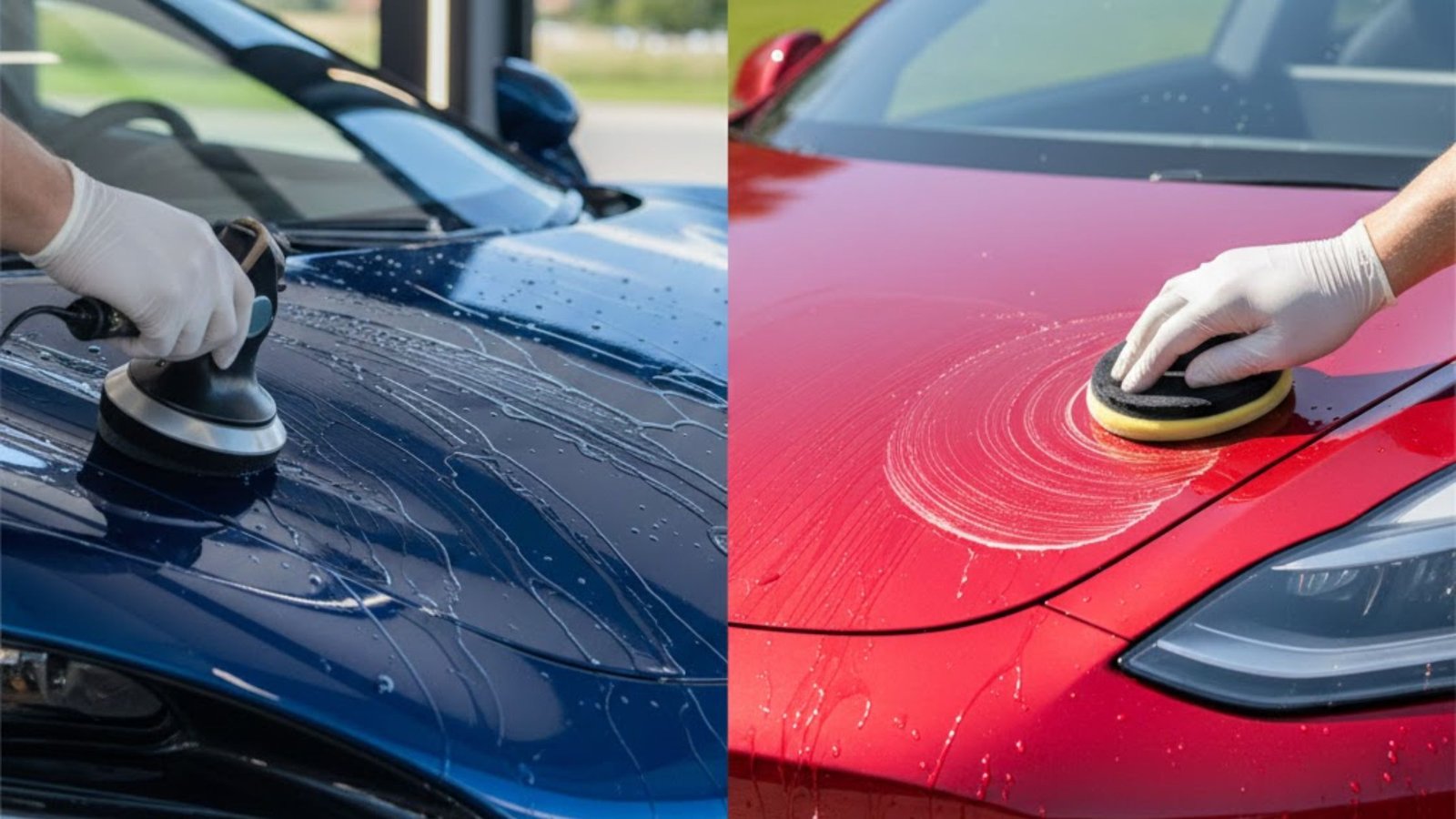
Applying a ceramic coating without first performing paint correction is a common mistake that ruins the final result. Because the coating is transparent and permanent, it will lock in every swirl mark and scratch currently on the paint. Professional detailers use machine polishers to remove these defects first, ensuring the paint is in its most perfect state before the “glass” layer is applied over the top.
The correction process is where the majority of the labor hours are spent in a professional detailing appointment. It involves a multi-stage approach of cutting and polishing to achieve a mirror-like finish. If you would like to see the difference that professional machine polishing can make for your vehicle’s appearance,
Once the paint is corrected, it must be chemically decontaminated to remove any polishing oils. This is another area where professionals excel, using specialized alcohol-based wipes to ensure the surface is clinically clean. If any oils remain, the coating will not bond properly, leading to “high spots” or premature failure. This technical precision is what justifies the cost of a professional service over a DIY kit.
| Feature | Carnauba Wax | Synthetic Sealant | Ceramic Coating |
| Durability | 4 – 6 Weeks | 4 – 6 Months | 3 – 5+ Years |
| UV Resistance | Low | Moderate | Extreme |
| Hardness | Soft | Flexible | 9H Hardness |
| Chemical Resistance | Very Low | Moderate | High |
| Hydrophobic Depth | Low | Moderate | Extreme |
Understanding the Hardness Scale and Scratch Resistance
A common marketing term in the industry is “9H Hardness,” which refers to the pencil hardness scale used to test the scratch resistance of coatings. This does not mean the car is bulletproof or immune to deep rock chips, but it does mean it is much harder to scratch during the washing process. Most swirl marks are caused by grit being dragged across the paint during a wash, and a 9H surface is much more resilient to this type of friction.
The hardness of a ceramic coating also provides a level of structural integrity to the paint. Modern factory paints are often “softer” than they were in the past due to environmental regulations on paint chemistry. A ceramic layer provides a harder “skin” that protects this softer paint from the micro-abrasions that occur during daily driving. It is essentially a sacrificial layer that takes the damage so your actual paint doesn’t have to.
However, it is important to maintain realistic expectations. If you drag a key or a sharp rock across a ceramic-coated car, it will still scratch. The value lies in its resistance to the “day-to-day” wear and tear that slowly dulls a car’s finish over time. By preventing these thousands of tiny scratches, the coating keeps the car looking newer for much longer than a car that relies on wax for protection.
Interior Ceramic Protection: Preserving the Cabin
While most people focus on the exterior, the interior of a car is where you spend your time, and it deserves equal protection. Ceramic coatings for interiors are formulated differently but provide the same hydrophobic benefits. They are applied to leather, vinyl, and plastic surfaces to prevent stains from coffee spills or dye transfer from blue jeans.
If you are interested in a comprehensive protection package that includes every surface of your vehicle, contact our team to create a custom quote for you. We can treat your steering wheel, dashboard, and even the carpets to ensure the entire vehicle is protected from the elements. This internal shield is especially important in the Alabama heat, where UV rays can quickly dry out and crack leather interiors.
Fabric coatings work by surrounding each individual fiber with a hydrophobic barrier. This means that if a drink is spilled, it will bead up on top of the carpet or seat rather than soaking in. You can simply blot the spill with a paper towel and it will disappear, leaving no stain or odor behind. This is a game-changer for parents or anyone who frequently has passengers in their vehicle.
Maintenance and the Two-Bucket Wash Method
Even the best ceramic coating requires proper maintenance to ensure it lasts for its intended lifespan. The most important rule is to avoid abrasive automated car washes. These machines use stiff brushes that can hold onto grit from the previous vehicle, which will eventually wear down the ceramic layer. Hand washing is the only way to guarantee the longevity of the protection.
The “two-bucket method” is the gold standard for maintaining a coated car. One bucket contains your soapy water, and the other is for rinsing your wash mitt. By rinsing the mitt after every pass, you ensure that you are never putting dirt back onto the paint. This simple technique is the best way to prevent the introduction of new swirl marks and keeps the coating looking as fresh as the day it was applied.
Using a pH-neutral soap is also critical. While ceramic coatings are chemically resistant, using highly acidic or basic cleaners on a regular basis can eventually degrade the top layer of the coating. Professional detailers recommend using soaps specifically formulated for ceramic coatings, as they often contain “boosters” that help maintain the hydrophobic properties and gloss of the surface.
Why DIY Ceramic Kits Often Fall Short
The market is currently flooded with “DIY” ceramic coatings that promise professional results for a fraction of the cost. However, these products are usually much less concentrated than professional-grade liquids. They are designed to be “user-friendly,” which means they are more forgiving during application but also much less durable. A professional coating has a much higher percentage of active solids, resulting in a thicker and harder shield.
The biggest factor in DIY failure is the lack of proper preparation. Most car owners do not have the expensive machine polishers or the high-intensity lighting required to perform a true paint correction. Applying a coating over unpolished paint is essentially locking in the defects forever. If you want the true benefits of a ceramic shield, the labor of a professional is just as important as the chemical itself.
Furthermore, a professional application comes with a warranty that is often backed by the manufacturer. If a DIY coating fails after six months, you have no recourse and have wasted your time and money. A professional detailer stands behind their work and can provide the ongoing maintenance support required to ensure the coating performs as promised for years to come.
Choosing a Professional Detailer in Birmingham
When searching for ceramic coating services, it is vital to choose a shop that is certified by the brand they use. Certification ensures that the technician has been trained in the specific application protocols required for that chemical. Every brand of coating has a different “flash time” and leveling procedure, and a certified professional knows exactly how to handle the product to avoid high spots or streaks.
You should also look for a shop that has a clean, climate-controlled environment for application. Dust is the enemy of a fresh coating, and applying a ceramic layer in a driveway or an open garage is a recipe for a rough, uneven finish. A dedicated clean room with filtered air is the only place where a professional-grade coating should be applied to ensure the highest possible quality.
Check the shop’s portfolio for consistent results on a variety of vehicle types. A detailer who can successfully restore the paint on a black luxury sedan is a detailer who can be trusted with your vehicle. Black paint is the most difficult to correct and coat because it shows every single imperfection, making it the ultimate test of a detailer’s skill and attention to detail.
Frequently Asked Questions (FAQs)
Does ceramic coating protect against rock chips?
No, a ceramic coating is a thin liquid polymer that provides chemical and UV protection. It is not thick enough to absorb the impact of a stone at highway speeds. For rock chip protection, you should consider a Paint Protection Film (PPF), which can be applied underneath a ceramic coating for the ultimate defense.
How long should I wait before washing my car after a detail?
Most professional ceramic coatings require a “cure time” of at least seven days before they can be washed with soap. During this time, the coating is still hardening and can be sensitive to chemicals. You can usually rinse the car with plain water after 24 hours, but you should avoid any friction on the surface.
Will ceramic coating make my car scratch-proof?
No, while a coating is much harder than your factory paint, it can still be scratched if handled improperly. The value lies in its resistance to the light marring caused by washing and its ability to prevent chemical etching. You must still use safe washing techniques to keep the surface perfect.
Can I get a ceramic coating on an older vehicle?
Absolutely. In fact, older vehicles often see the most dramatic transformations because the paint correction process removes years of oxidation and scratches. A ceramic coating can make an older car look better than it did when it was new, provided the clear coat is still healthy enough to be polished.
How do I know if the coating is still working?
The most obvious sign that a coating is active is the water-beading performance. If water is still forming tight beads and rolling off the surface, the protection is intact. If the water begins to “sheet” or sit flat on the paint, it may be time for a professional decontamination wash or a booster application.
Investing in Professional Ceramic Coatings: Superior Value Over Wax
In conclusion, the decision to invest in professional ceramic coating services is a choice for quality, efficiency, and long-term peace of mind. While the upfront cost is higher than a standard wax, the benefits of superior UV protection, chemical resistance, and the incredible ease of maintenance provide a value that traditional methods cannot match. By choosing a permanent covalent bond over a temporary wax, you are ensuring that your vehicle remains a high-value asset that looks its best for years to come. At Aesthetics Auto Solutions, we are dedicated to providing the highest level of craftsmanship and utilizing the most advanced nanotechnology to protect your investment. We believe that every car deserves to shine, and our team is ready to help you achieve the ultimate finish for your vehicle. Reach out to us today to discuss your paint protection goals and see why ceramic coating is the clear choice for discerning car owners who demand the best for their vehicles.