Can Ceramic Coating Be Applied Over PPF or a Vinyl Wrap?
Yes, ceramic coating can be safely and effectively applied over paint protection film (PPF) and vinyl wraps. When vehicle owners schedule professional ceramic coating in West Boylston, adding this liquid polymer over films creates a synergistic barrier that enhances stain resistance, blocks harmful ultraviolet rays, and simplifies maintenance. While PPF and vinyl shield vehicle panels from physical road debris and color fade, they remain porous and vulnerable to chemical contamination, water spotting, and environmental fallout. Applying a ceramic layer seals these pores, significantly prolonging the lifespan and aesthetic appearance of the underlying film.
Can You Ceramic Coat Paint Protection Film and Vinyl Wraps?
Yes, you can apply ceramic coatings over both paint protection film and vinyl wraps, provided the film has completely dried and cured. PPF and vinyl wraps are engineered with specialized synthetic polymers that accept modern ceramic coatings without interfering with adhesive backing or film stability.
Automotive films serve distinct physical functions, but neither material provides optimal chemical slickness on its own:
- Paint protection film (PPF): Made from clear thermoplastic polyurethane (TPU), PPF absorbs physical kinetic impact from stones, gravel, and road sand. While flexible, TPU has microscopic pores that can trap acidic contaminants and road grime over time.
- Vinyl wrap: Composed of polyvinyl chloride (PVC), vinyl is primarily an aesthetic material designed to alter vehicle color, sheen, or texture. PVC is thinner than PPF and vulnerable to oxidation, surface fading, and stubborn staining from outdoor elements.
Applying an inorganic ceramic coating over these materials seals the surface pores. The liquid formula cross-links across the top surface, forming a rigid sacrificial shield that shields the delicate wrap material underneath from chemical degradation.
Why Should You Apply Ceramic Coating Over Automotive Film?
You should apply a ceramic coating over automotive film because it provides vital chemical defense, hydrophobic water repellency, and UV resistance that standard wraps and clear bras lack. While PPF and vinyl excel at resisting physical rock chips or changing paint colors, they remain susceptible to everyday environmental hazards.
Superior Resistance to Chemical Staining and Etching
Polyurethane and vinyl films are porous materials that readily absorb harsh environmental acids. Tree sap, bird droppings, bug splatter, and road de-icing salts can penetrate unprotected films within days, causing permanent discoloration and yellowing. Ceramic coating over paint protection film establishes an impermeable barrier with high chemical tolerance (typically pH 2 through pH 12), ensuring caustic chemicals slide off or wash away without etching into the film.
Long-Term UV Shielding and Anti-Yellowing
Prolonged exposure to ultraviolet radiation degrades the plasticizers and adhesives inside vinyl wraps and clear bras. Over time, unconditioned films dry out, develop spiderweb cracking, or turn cloudy and yellow. Ceramic coatings contain dense inorganic UV inhibitors that deflect harmful solar rays, keeping transparent PPF crystal clear and preserving the true color saturation of custom vinyl.
Extreme Hydrophobic Properties and Easier Washing
The cured ceramic surface creates a high water-contact angle, causing liquids to bead tightly and roll off vehicle panels. This hydrophobic action prevents dirt, mud, and brake dust from embedding into the soft surface of the wrap. Routine maintenance hand-washes become substantially faster, requiring less physical agitation and eliminating the drag friction that causes micro-marring.
Preserving Self-Healing Properties on PPF
Most modern premium paint protection films feature an elastomeric topcoat that heals fine swirl marks when exposed to engine heat or direct sunlight. A high-grade ceramic coating designed for automotive films will not inhibit or stiffen this self-healing capability. Instead, it protects the delicate topcoat from chemical degradation so the healing mechanism functions smoothly over a multi-year service life.
Differences Between Coating PPF vs. Vinyl Wraps
The primary difference between coating PPF and vinyl wraps lies in material elasticity, substrate thickness, and finish textures. Installers must adjust their application and product choice based on whether they are working with elastomeric polyurethane or rigid vinyl.
When comparing protection films for vehicle application, paint protection film (PPF) utilizes flexible thermoplastic polyurethane (TPU) engineered primarily for kinetic impact absorption against road gravel, spanning 6 to 10 mils (150 to 250 microns) in thickness. Designed with microscopic surface pores and self-healing topcoat properties that repair minor swirl marks, PPF requires flexible, low-solvent ceramic formulations and supports gloss, satin, or matte clear bra finishes.
In contrast, a vinyl wrap relies on polyvinyl chloride (PVC) focused on aesthetic color alterations and custom styling. Measuring a thinner 3 to 4 mils (75 to 100 microns), PVC features a denser, rigid plastic structure lacking self-healing capabilities, meaning surface scratches remain permanent. Vinyl wraps demand solvent-safe ceramic coatings tailored to specific finish types, protecting diverse options including gloss, matte, satin, brushed, and metallic textures.
Does Ceramic Coating Change the Look of Matte or Satin Wraps?
No, a ceramic coating will not add an artificial gloss or shiny patches to a matte or satin wrap, provided the installer applies a coating formulated specifically for non-gloss finishes.
Matte and satin vinyl wraps scatter reflected light across microscopic textured surfaces to achieve their flat, low-sheen look. Applying standard gloss-enhancing car waxes or polishing compounds fills these microscopic valleys, leaving behind uneven shiny spots and ruined textures.
Specialized matte-safe ceramic coatings bond to the contours of the textured film without leveling or smoothing the surface profile. The result is deep, rich color saturation that preserves the factory matte or satin sheen while delivering full hydrophobic protection.
How Long Should You Wait to Ceramic Coat After PPF or Vinyl Installation?
You should typically wait between 48 hours and 7 days after film installation before applying a ceramic coating. This waiting period allows all installation fluids and moisture trapped between the film and clear coat to evaporate completely.
PPF and vinyl installers use a slip solution containing water, alcohol, or mild surfactant soaps to float the film across vehicle panels. Technicians squeegee the majority of this liquid out during installation, but microscopic pockets of moisture remain under the film edges and flats.
- Immediate coating risks: Applying an impermeable ceramic layer prematurely seals moisture underneath the film, creating persistent water bubbles, edge lifting, and adhesive failure.
- Curing conditions: In warm, low-humidity environments, wraps dry out and cure firmly within 48 to 72 hours. In cooler or humid climates, waiting 5 to 7 days guarantees total adhesion and safe outgassing.
- Edge inspection: Waiting allows the installer to inspect panel edges, tuck points, and relief cuts, ensuring every seam is bonded tightly before the ceramic layer seals the vehicle.
How Professionals Prepare and Apply Ceramic Coating Over Film
Coating film requires specific surface prep procedures compared to bare automotive clear coat. Because machine polishers and abrasive compounds can easily burn, haze, or melt synthetic wraps, professional installers rely on non-abrasive surface refinement.
Step 1: Gentle Decontamination Wash
Installers begin with a dedicated hand wash using a pH-neutral, wax-free automotive shampoo. Technicians use soft microfiber wash mitts to avoid pulling at film edges or introducing drag marks into the wrap.
Step 2: Chemical Decontamination
Embedded brake dust and industrial rail dust must be eliminated without damaging the film. Technicians apply a specialized iron remover formulated to dissolve metallic particles safely without staining TPU or PVC materials. Clay bars are used sparingly, if at all, to prevent marring soft film topcoats.
Step 3: Alcohol Panel Preparation
Installers wipe every panel with a gentle isopropyl alcohol (IPA) solution or a dedicated panel wipe. This step strips away road oils, fingerprints, and installation slip residues, exposing a completely bare surface for maximum ceramic cross-linking.
Step 4: Methodical Hand Application
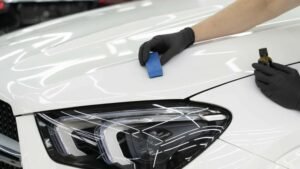
The installer applies the liquid ceramic coating using a foam applicator block and a micro-suede cloth. Working in small, cross-hatch sections, the technician spreads an even layer across the panel without building excess fluid around film edges or seams.
Step 5: Leveling and Flash Monitoring
Automotive films absorb and flash ceramic coatings differently than clear coat. Installers monitor the rainbow-colored flash phase closely, leveling high spots with plush microfiber towels to prevent streak lines or cloudy hazing.
Step 6: Controlled Curing
The coated vehicle rests in a climate-controlled bay to begin its initial cross-linking phase. Technicians frequently employ short-wave infrared heat lamps to accelerate surface hardening and secure chemical bonding across the film face.
Can You Ceramic Coat Unprotected Paint and Film on the Same Vehicle?
Yes, you can safely apply ceramic coatings across both film-covered sections and exposed factory paint on the same vehicle. In fact, combining paint protection film on high-impact areas with a full ceramic coating over the entire vehicle is one of the most effective protection strategies available.
Many vehicle owners apply PPF exclusively to high-impact frontal zones:
- Front bumper and lower valance
- Full hood and front fenders
- Side mirror caps
- Headlights and fog lights
- A-pillars and rocker panels
By applying ceramic coating in West Boylston over both the frontal film and the bare factory paint on doors, roofs, and rear panels, the entire exterior receives uniform water beading, chemical resistance, and UV defense. This hybrid approach eliminates visible texture lines between bare paint and filmed sections, creating seamless visual gloss across the entire vehicle.
Common Mistakes to Avoid When Coating Wraps and PPF
Applying ceramic coatings to synthetic vehicle films requires avoiding several critical mistakes that can ruin expensive wrap installations:
- Using abrasive machine compounds: Never use a rotary or dual-action polisher with cutting compounds on vinyl or PPF. The mechanical friction generates heat that melts the film or burns permanent haze into the plastic.
- Using solvent-heavy ceramic coatings: Some industrial clear-coat ceramics contain aggressive solvent carriers that can dissolve vinyl adhesives or swell TPU topcoats. Only use coatings certified for coating vinyl-wrapped vehicles and protective films.
- Excessive product pooling along film seams: Allowing liquid coating to build up along the cut edges of PPF or vinyl creates unsightly white crusts and can weaken edge adhesion over time.
- Applying coatings in cold or damp conditions: Installing coatings in unheated, humid spaces prevents proper carrier evaporation, leaving streaks and compromising long-term durability.
- Neglecting regular hand washing: While ceramic coatings dramatically reduce maintenance effort, letting heavy road grime or winter salts sit on the coating for weeks can slowly degrade hydrophobic performance.
Why Choose Professional Ceramic Coating in West Boylston?
Choosing professional ceramic coating in West Boylston provides your vehicle with the defense needed to survive the harsh seasonal shifts of central Massachusetts.
New England driving poses relentless challenges to automotive wraps and clear bras. Winter brings road salt, abrasive sand, and corrosive de-icing chemicals that etch into exposed film pores. Summer delivers high UV indexes, tree resins, and extreme humidity that dry out vinyl plasticizers. When you schedule professional ceramic coating in West Boylston, local technicians inspect film integrity, verify seam stability, and apply advanced coatings engineered to handle the demands of regional driving.
Relying on experienced local installers ensures that your film receives proper curing times and compatible product formulations. Professional installation protects your wrap investment, eliminates maintenance headaches, and keeps your vehicle looking pristine through every season.
Frequently Asked Questions About Ceramic Coating Over PPF and Vinyl
Does ceramic coating prevent a vinyl wrap or PPF from being removed later?
No, ceramic coating will not interfere with the future removal of a vinyl wrap or paint protection film. The ceramic coating chemically bonds strictly to the outer surface of the film, never penetrating through the material to affect the underlying adhesive layer bonded to your vehicle’s factory paint.
Can ceramic coating fix existing scratches or rock chips in a film?
No, ceramic coatings cannot fill or repair existing physical damage such as rock tears, deep gouges, or severe scratches on PPF or vinyl. Ceramic coatings cure to a microscopic thickness of just a few microns, meaning they preserve and protect the surface as it exists rather than repairing physical defects.
How long does a ceramic coating last on paint protection film or vinyl?
A quality ceramic coating applied over PPF or vinyl typically lasts between 2 and 5 years, depending on the chemical formula, vehicle storage, and maintenance habits. Because film flexes slightly more than rigid automotive clear coat, coatings formulated specifically for films maintain elasticity to prevent premature flaking.
Can you apply a standard car wax over a ceramic-coated wrap?
No, you should never apply traditional carnauba waxes or paste sealants over a ceramic-coated film. Waxes leave an oily residue that masks the ceramic coating’s natural hydrophobic properties, attracts road dust, and can stain the porous edges of vinyl wraps and PPF.
Is ceramic coating really necessary if modern PPF already has a self-healing topcoat?
Yes, applying ceramic protection for automotive film remains highly beneficial even with a self-healing topcoat. Self-healing topcoats react to mechanical scratches and swirl marks, but they offer limited defense against caustic environmental acids, bird droppings, water spotting, and harsh winter chemicals. Ceramic coatings fill this gap by providing high-level chemical resistance.
Preserving Your Automotive Film with Advanced Surface Science
Applying a ceramic coating over paint protection film or a vinyl wrap provides the ultimate combination of impact absorption and chemical resistance. While films shield your vehicle from rock chips and scratches, an inorganic ceramic barrier stops environmental acids, UV degradation, and road salts from ruining the film itself. Investing in professional ceramic coating in West Boylston guarantees that your vehicle’s wrap receives meticulous panel prep, edge-safe application, and long-lasting protection suited to regional driving conditions.
At Aesthetic Auto Solutions, our technicians understand the unique chemistry of automotive films and apply specialized ceramic formulations designed to protect your investment. Backed by our 5 star google rating, we provide transparent guidance, precision application, and master-level surface treatments tailored to your vehicle. If you want to maximize the lifespan and finish of your PPF or custom wrap, contact us today to schedule a consultation.