How Ceramic Coating Services Protect Your Vehicle: A Complete Guide
Professional ceramic coating services provide a semi-permanent or permanent liquid polymer shield that chemically bonds to your vehicle’s factory paint to create a robust layer of protection. In 2026, this nanotechnology will become the gold standard for automotive preservation because it utilizes Silicon Dioxide (SiO2) to fill the microscopic pores of your clear coat, resulting in a surface that is significantly harder and more durable than traditional waxes. By investing in these services, you are securing a high-gloss finish that offers extreme hydrophobic properties, meaning water and contaminants slide off with minimal effort. This advanced form of vehicle paint protection is designed to withstand the harsh environmental factors of daily driving, including intense UV radiation, acidic bird droppings, and industrial fallout, while maintaining a showroom-quality appearance for years rather than months.
What is the primary value of ceramic coating services?
The primary value of professional ceramic coating services lies in their ability to provide a long-lasting, sacrificial barrier that protects your car’s exterior from nearly all forms of environmental degradation. Unlike traditional carnauba wax or synthetic sealants that sit on top of the paint and wash away after a few months, a ceramic layer becomes an extension of your clear coat through a process of covalent bonding. This means the protection is integrated into the surface, providing a level of resistance that can withstand thousands of car washes and extreme temperature fluctuations without failing.
For many vehicle owners, the most immediate benefit is the dramatic increase in optical clarity and gloss. The coating acts like an additional layer of glass over the paint, enhancing the depth of the color and creating a reflective surface that is difficult to achieve with any other product. This aesthetic improvement is not just a temporary shine but a permanent state of the vehicle that remains as long as the coating is properly maintained through safe washing techniques.
Beyond the visual appeal, these services offer a massive reduction in the time and effort required for maintenance. Because the surface becomes incredibly smooth and hydrophobic at a molecular level, dirt and road grime find it nearly impossible to bond to the paint. This means that a simple rinse often removes the majority of surface dust, and a standard maintenance wash becomes a quick and satisfying task rather than a labor-intensive scrubbing session.
Exploring the Science Behind How Ceramic Coating Works
To understand the efficacy of this technology, one must look at the principles of nanotechnology and chemical bonding. Most premium coatings are SiO2, which is essentially liquid glass in a carrier solvent. When applied to a surface, the solvent evaporates, leaving behind the solid glass particles that have navigated into the tiny crevices of the paint. This creates a surface that is much flatter and more uniform than the factory clear coat, which is actually quite porous when viewed under a microscope.
The “9H” rating often mentioned in the industry refers to the Pencil Hardness Scale, indicating that the coating is resistant to scratches from minerals or objects that fall below that threshold. While it does not make your car bulletproof or completely immune to deep rock chips, it provides a much tougher surface that resists the “spider-web” swirl marks caused by improper drying or automated car washes. This hardness is the result of the cross-linking molecules that form a tight, protective lattice across the entire vehicle.
This chemical structure is also what provides the extreme heat resistance that modern vehicles require. While traditional waxes begin to melt and lose their protective properties at temperatures around 110 to 120 degrees Fahrenheit, a professional ceramic layer can withstand temperatures exceeding 500 degrees. This makes it an ideal solution for protecting engine components and wheels, which are subject to high heat from braking and combustion, ensuring that every part of the vehicle remains shielded.
Significant Ceramic Coating Benefits for Every Vehicle Owner
When examining the long-term advantages, ceramic coating benefits extend far beyond just a shiny exterior. One of the most critical aspects is the prevention of oxidation and paint fading caused by the sun’s ultraviolet rays. Over time, UV exposure breaks down the chemical bonds in your paint, leading to a dull, chalky appearance that can only be fixed by a costly professional repaint. The ceramic layer absorbs these rays, acting as a high-SPF sunscreen for your car.
The chemical resistance of these coatings is another major selling point for daily drivers. Environmental contaminants like tree sap, bug splatter, and bird droppings are highly acidic and can etch into a clear coat within hours if the vehicle is parked in the sun. A ceramic coating provides a barrier that neutralizes these acids, giving you a much larger window of time to remove the contaminants before they can cause permanent damage to the finish.
| Feature | Carnauba Wax | Synthetic Sealant | Ceramic Coating |
| Durability | 1 – 3 Months | 4 – 8 Months | 2 – 5+ Years |
| UV Resistance | Low | Moderate | Extreme |
| Hardness Level | Soft | Flexible | 9H Hardness |
| Hydrophobicity | Moderate | High | Extreme |
| Chemical Resistance | Low | Moderate | High |
The hydrophobic nature of the surface also contributes to safer driving during inclement weather. When applied to glass surfaces, the coating causes rainwater to bead up and roll off instantly, significantly improving visibility during heavy downpours. This effect is so pronounced that at highway speeds, you may not even need to use your windshield wipers. This safety aspect is an underrated benefit that many owners appreciate during the stormy seasons.
The Professional Application Process for Maximum Durability
The success of a ceramic application is almost entirely dependent on the preparation phase. A professional detailer will first perform a thorough decontamination of the paint, using chemical iron removers and a clay bar to pull out embedded grit that a standard wash cannot touch. If these contaminants are not removed, the coating will bond to the dirt rather than the paint, leading to premature failure and a rough texture.
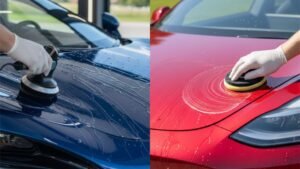
Paint correction is the next and most vital step in the process. Because a ceramic coating is transparent and semi-permanent, it will lock in any existing scratches, swirl marks, or holograms that are present on the surface. A technician must use machine polishers and abrasive compounds to level the clear coat, creating a perfectly smooth and defect-free surface. This ensures that the final result is a mirror-like finish that looks better than it did when it left the factory.
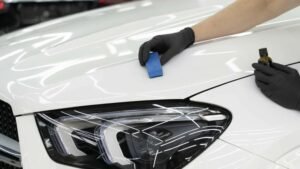
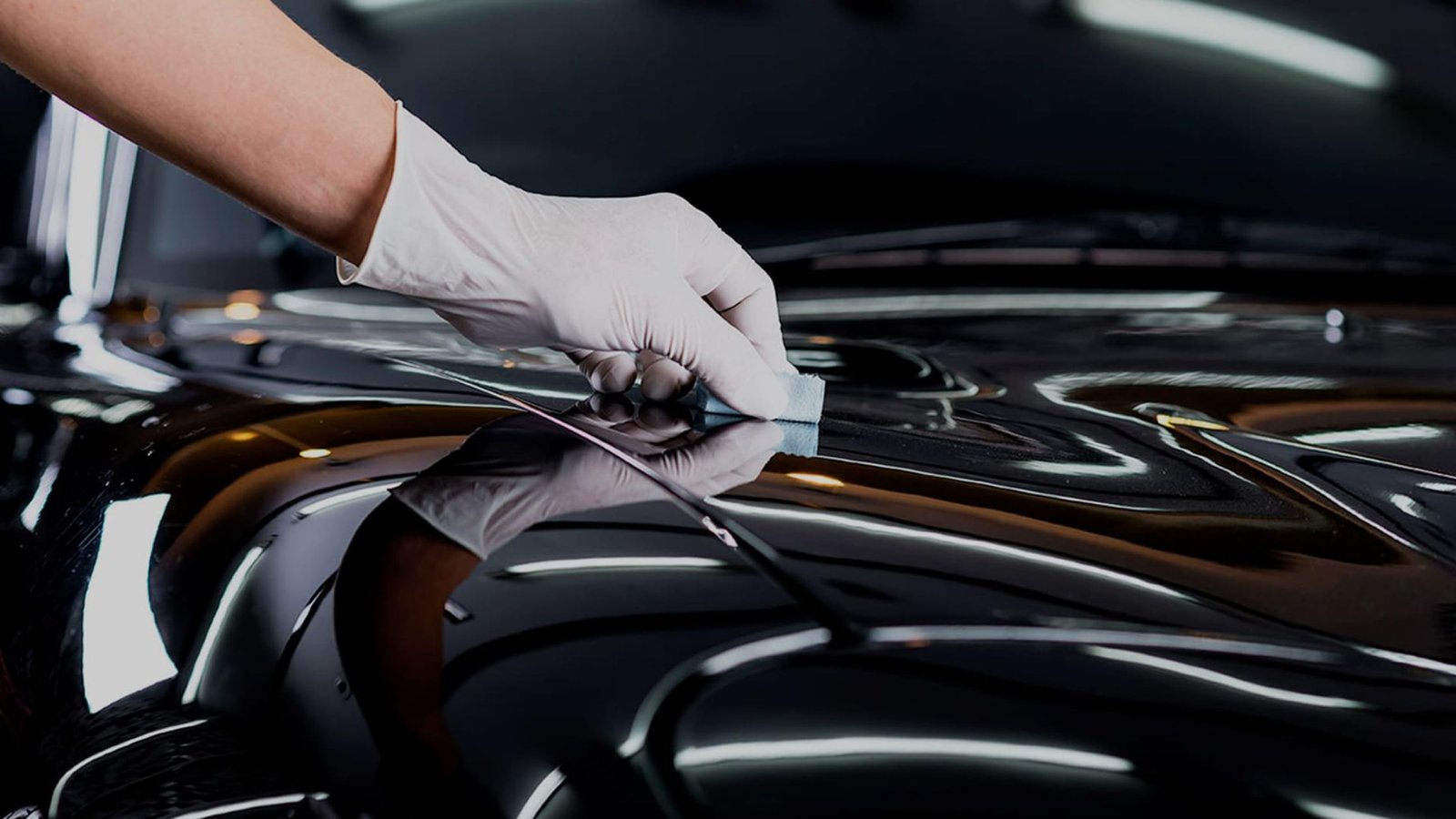
Once the paint is corrected and wiped down with a specialized alcohol-based solution to remove polishing oils, the coating is applied in small sections. The liquid is spread evenly using a suede applicator and allowed to “flash” or bond with the air. The timing of the “leveling” or “buffing off” stage is critical; wait too long, and the coating becomes too hard to spread, resulting in high spots that look like oil slicks. Professional training is essential here to ensure a uniform and streak-free application across the entire body of the vehicle.
Why Vehicle Paint Protection is a Critical Investment
In a world where vehicle prices continue to rise, protecting the exterior is a matter of financial responsibility. A car that looks well-maintained will always command a higher resale value or trade-in price than one with faded paint and stained upholstery. By prioritizing vehicle paint protection early in the ownership cycle, you are essentially purchasing an insurance policy for your car’s aesthetic and financial future.
This investment pays for itself in the reduction of detailing costs over time. Instead of paying for a full polish and wax every few months, a ceramic-coated car only requires a simple maintenance wash to look its best. You save money on expensive chemicals, waxes, and the labor required to apply them. For many owners, the reclaimed time is the most valuable part of the equation, as the car stays cleaner for much longer periods between washes.
If you are interested in preserving your vehicle and want to explore the specific options available for your make and model, you can contact us to schedule a consultation. We can help you determine the best level of protection based on your driving habits, where you park your car, and how long you plan to keep the vehicle. Professional advice ensures that you don’t overspend on features you don’t need while still getting the best possible shield for your paint.
How Ceramic Coating Works to Repel Contaminants
The repulsion of contaminants is a result of the low surface tension created by the ceramic layer. In scientific terms, this is often referred to as the “Lotus Effect,” named after the lotus leaf which remains clean despite growing in muddy water. When a surface is extremely smooth, water cannot “wet” the surface; instead, it maintains its spherical shape and rolls off, carrying dust and loose dirt with it. This self-cleaning property is a hallmark of high-quality ceramic coating services.
This repulsion also applies to industrial fallout and brake dust. Brake dust is composed of tiny shards of hot metal that fly off your brake rotors and can actually melt into the clear coat of your wheels. When wheels are ceramic coated, the dust cannot find a way to bond to the surface. A simple spray of water or a light wheel cleaner is usually enough to remove even the heaviest accumulation of brake dust, keeping your wheels looking new and preventing the pitting that often occurs on neglected rims.
Even interior surfaces can benefit from this technology. Many modern coatings are formulated for leather, fabric, and plastics, providing a barrier against spills and stains. If a child spills a drink on a coated leather seat, the liquid will bead up on the surface rather than soaking into the pores of the hide. This gives you time to wipe it away without leaving a permanent mark or a lingering odor, preserving the interior cabin’s luxurious feel and smell.
Maintaining the Integrity of Your Coating Over Time
While a ceramic coating is incredibly durable, it is not an “apply and forget” solution. To ensure the coating reaches its maximum lifespan, you must follow a specific maintenance routine. The most important rule is to avoid abrasive automated car washes that use stiff brushes. These brushes can hold onto dirt from previous vehicles and will eventually cause micro-marring on even the hardest ceramic surfaces. Hand washing using a pH-neutral soap is always the preferred method.
Using the “two-bucket method” is essential for safe maintenance. One bucket contains your soapy water, and the other contains clean water to rinse your wash mitt after every pass. This ensures that you are never putting dirty water back onto the paint. Drying the car with a high-quality, plush microfiber towel or a dedicated air blower is also recommended to prevent any unnecessary friction on the surface.
Occasionally, the coating may appear to lose its hydrophobic properties. This is usually due to a layer of “traffic film” or mineral deposits that have settled on top of the coating. A professional detailer can perform a “decontamination wash” using specialized chemicals to strip these minerals and “unclog” the coating, restoring its original performance. Using a ceramic-infused maintenance spray every few months can also act as a “booster,” adding an extra layer of slickness and gloss to the existing coating.
Comparing Professional Application to DIY Kits
The market is currently flooded with “DIY ceramic coatings” that promise professional results for a fraction of the price. While these products are often better than a basic wax, they are usually much less concentrated than the professional-grade liquids. Professional coatings contain a higher percentage of active solids, which results in a thicker, harder layer that lasts years longer than the consumer versions found on the shelves of auto parts stores.
The biggest difference, however, is the warranty and the labor. A professional application includes a multi-step paint correction process that most DIYers do not have the tools or experience to perform. Applying a coating over unpolished paint will only highlight the defects and make them much harder to fix later. Professional shops also offer warranties that guarantee the coating’s performance for a set number of years, providing peace of mind that your investment is protected.
Furthermore, a professional has access to high-intensity lighting and climate-controlled environments that are necessary for a perfect application. Applying a coating in a dusty driveway or in direct sunlight can lead to “high spots,” streaks, and uneven curing. When you consider the cost of the tools, the chemicals, and the dozens of hours required to do the job correctly, the value of a professional service becomes very clear for those who want the best possible result for their vehicle.
The Role of Curing in the Ceramic Process
Once the coating has been applied and leveled, it enters the “curing” phase. This is the period during which the liquid polymer turns into a solid glass-like shield. Most coatings require at least 24 hours of dry time before they can be exposed to rain or moisture. If a car gets wet too soon, the water can interfere with the chemical bond, leading to spots or a weakened layer that will not last as long as intended.
Professional shops often use infrared (IR) curing lamps to accelerate this process. These lamps use heat to bake the coating from the inside out, ensuring a deep and uniform bond with the paint. This not only makes the coating harder but also allows the car to be returned to the owner much faster. Without IR lamps, the full curing process can take several days or even a week, during which time the owner must be extremely careful not to use any chemicals or soaps on the paint.
After the initial 24-hour period, the car is safe to drive, but the coating is still technically “soft” for the first week or two. During this time, it is recommended to avoid washing the car or using any heavy chemicals. Once the 14-day mark has passed, the coating is fully hardened and ready to take on the world. Understanding this timeline is a key part of the communication between a professional detailer and the client, ensuring that the hard work put into the application isn’t undone by a premature wash.
Environmental Impact of Modern Detailing Services
Many people are concerned about the environmental impact of the chemicals used in automotive detailing. The good news is that ceramic technology is often more eco-friendly than traditional methods in the long run. Because a coated car stays cleaner for longer, it requires significantly less water over its lifetime. Additionally, the need for aggressive degreasers and harsh cleaners is diminished because dirt doesn’t bond as strongly to the surface.
The longevity of the product also means less waste. Instead of throwing away empty bottles of wax and sealant every few months, a single professional application lasts for years. Many high-end coating companies are also moving toward “green” chemistry, creating formulas that are safer for the technician to apply and less harmful to the local water supply when rinsed off. This sustainable approach to car care is a major benefit for environmentally conscious drivers.
By choosing a professional who uses these advanced methods, you are participating in a more sustainable form of vehicle maintenance. The reduction in chemical runoff and the conservation of water are significant contributors to a healthier local ecosystem. It is a rare case where the most effective product on the market also happens to be one of the most responsible choices for the planet.
Frequently Asked Questions (FAQs)
How long do ceramic coating services actually last?
Depending on the specific product and the level of maintenance, a professional coating can last anywhere from 2 to 7 years. Some elite “lifetime” coatings can last even longer if they receive an annual inspection and maintenance boost from a professional detailer.
Does a ceramic coating stop rock chips?
While a ceramic coating is 9H hard and resists minor scratches, it is not thick enough to stop the impact of a rock at highway speeds. For protection against physical impacts like stone chips, you should consider a Paint Protection Film (PPF), which can be applied underneath a ceramic coating.
Can I take my coated car through a car wash?
It is strongly recommended to avoid automated “brush” car washes. The abrasive nature of the brushes will wear down the coating over time. “Touchless” washes are a better alternative, but a hand wash using the two-bucket method is the gold standard for maintaining the coating’s longevity.
Can ceramic coating be applied to a matte finish?
Yes, there are specific coatings designed for matte and satin finishes. These products provide the same level of protection and hydrophobicity without adding an unwanted gloss or shine to the flat finish of the vehicle.
Is ceramic coating better than a clear bra (PPF)?
They serve different purposes. PPF is a thick film designed for impact protection (rock chips), while ceramic coating is a thin liquid designed for chemical resistance, UV protection, and gloss. For the ultimate protection, many owners apply PPF to the high-impact areas (front bumper/hood) and ceramic coat the entire vehicle.
Ceramic Coating Services: Ultimate Protection for Your Vehicle
In conclusion, relying on professional ceramic coating services is the most effective way to ensure your vehicle remains protected and visually stunning for years to come. By creating a permanent bond with your paint, these advanced coatings offer a level of UV resistance, chemical protection, and hydrophobicity that traditional products simply cannot match. Whether you are driving a brand-new luxury car or a well-loved daily driver, the investment in high-quality paint protection pays dividends in reduced maintenance and higher resale value. At Aesthetics Auto Solutions, we are committed to providing the highest level of craftsmanship and using the most advanced nanotechnology to preserve your vehicle’s beauty. We understand the science of the surface and take pride in delivering results that exceed our clients’ expectations. Reach out to us today to see how we can transform your car care experience and provide the ultimate shield for your automotive investment.